Categories
Games Reviews

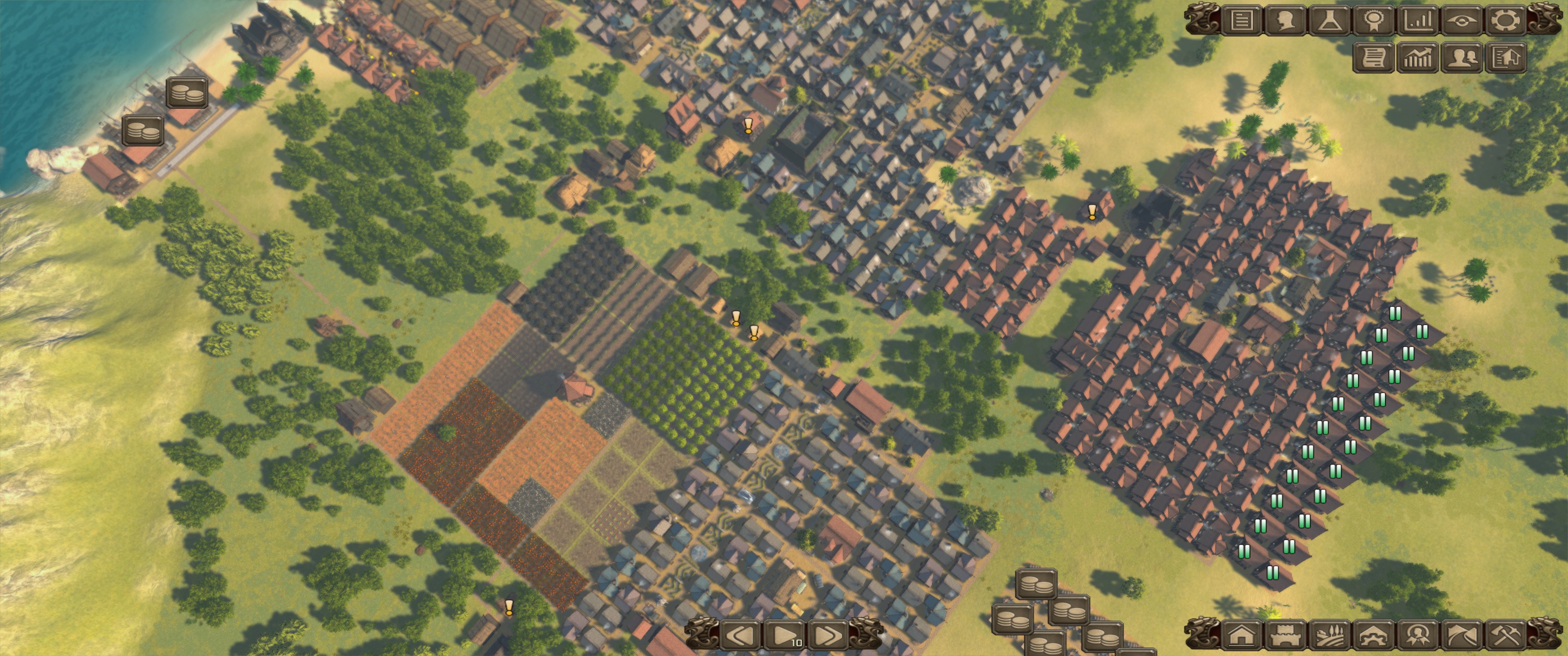
Steam Base Building Fest 2023

I feel like this Steam Fest is targeting me. A good chunk of my wishlist went on sale and while I’ve already played most of the demos here that I’m interested in, I found a few to give a try. (Like last time, I’ll be updating this post as I try new demos.)

SteamWorld Build

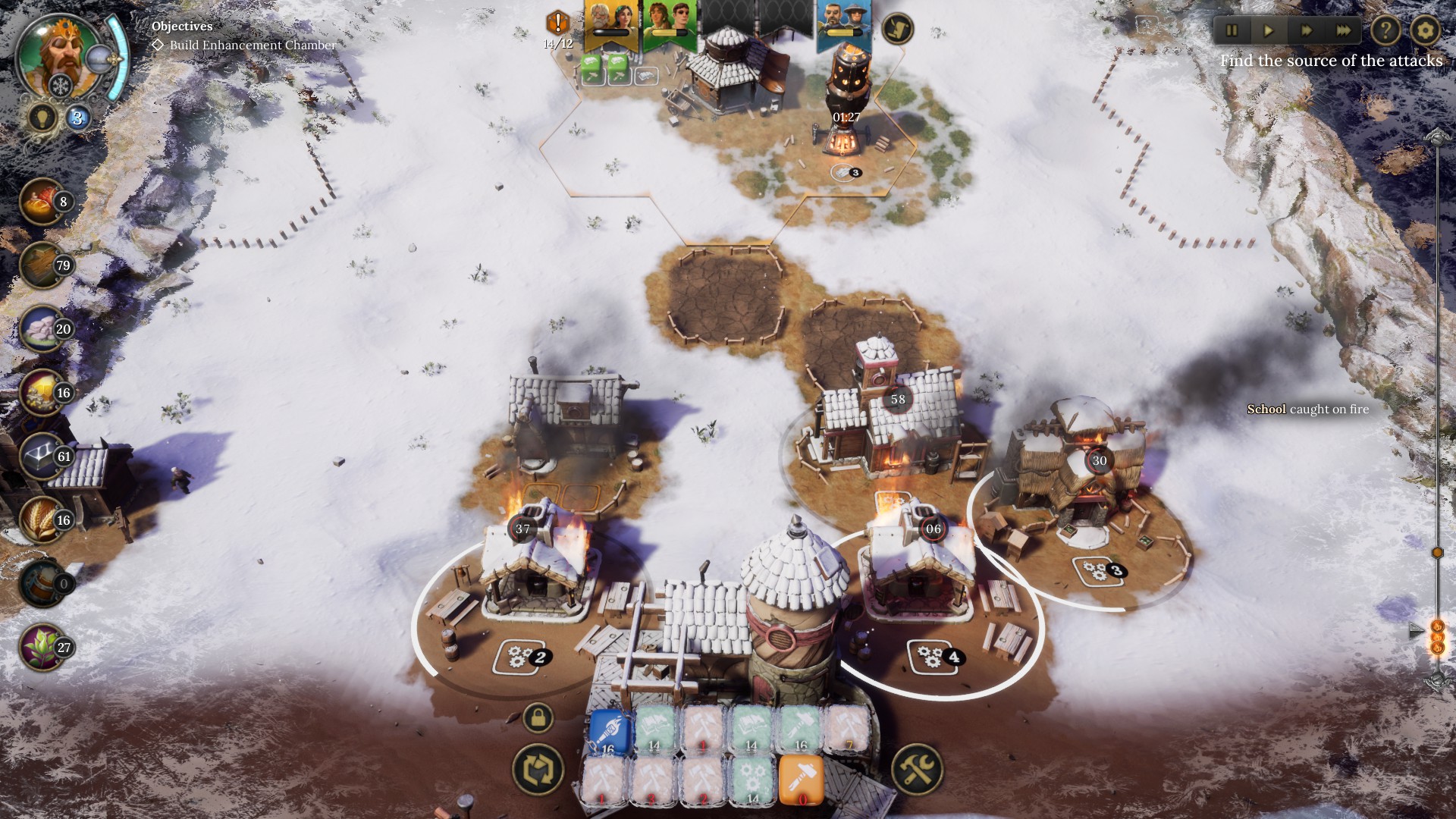
While this wasn’t exactly in the fest, it’s related so I’m putting it here. SteamWorld Build combines a city-builder with a Dungeon Keeper-style mining and tower defense underground. While the demo doesn’t contain any of the combat shown in the trailer, I enjoyed what was available. It’s a little on the easier side, as far as city-builders go, but there was still plenty to do. The style is great, too, with little steampunk robots wandering around everywhere.

Empires of the Undergrowth

I’ve been interested in this game for a while, thinking it might be a modern re-imagining of SimAnt. Turns out that’s not what it is. It’s more of a simple RTS where you collect food, build an army, and attack other insects.

Kubifaktorium

A cute voxel city builder and factory game. The logistics system is pretty easy to use. Demo only covers the tutorials, but they explain things pretty well.

Roboplant

A cute game where you have robots grow and sell plants. Couldn’t beat the tutorial level, and I’m not sure why… My worker just stopped working and just spent all their time playing games and eating from the snack machine. Probably needs some more time to work some bugs out.

Citizens: Far Lands

More a puzzle game than a city-builder. Buildings can be placed freely, which is nice, but they have a zone around them that they work with, meaning being a few pixels off can mean the difference between maximizing production and missing out on resources. It’s pleasant and minimalist, though.

WW2 Rebuilder

I’ve played this sort of building game before (House Flipper, Gas Station Simulator), but I typically find them incredibly boring. This one looked more interesting, like it had some more depth. Turns out it’s just a well-themed building game. The atmosphere is nice and the theme is actually very interesting, but it’s just as boring as other games in the same genre.

Facteroids

An asteroid-mining factory building game. A neat idea, but the controls and interface are really awkward.

Plan B: Terraform

Extract resources, transport them to factories, build stuff, grow cities, terraform planet. I like the art style – simple and clean – but I’m not sure if I like this style of factory-building game where you just build bigger and bigger with long stretches of highway to bring things from one place to another.

New Cycle

Feels a lot like Frostpunk, from the tone to the UI, which isn’t a bad thing. A solar flare sent human civilization back to its tribal roots, and you’re in charge of building a settlement to restore society. Plays great; I’ll definitely be picking this one up when it releases.

Havendock

A pleasant little city builder with some very light survival elements. You can attract survivors to your little dock and have them help out with the chores. Like Raft, but third person and without that asshole shark.

Desynced

Seems to be an interesting mix of Factorio and your typical RTS, with units you modify with different components (mining lasers, defense lasers, assemblers, etc.) and can order around. Seems interesting, but the first steps were really slow, to the point of just waiting around most of the time. I’m sure it’s more interesting later, but I couldn’t take all the idle time. I think I’d love it if things moved a bit faster.

The Last Starship

I’m still trying to decide if I’m interested in this one. I like Introversion’s stuff, but I couldn’t tell from what I played of the demo if it’s like FTL, where you have to constantly keep moving from system to system, or if you can just do whatever missions you want wherever you go. The shipbuilding is interesting, and the separation of the main deck from the “habitation” deck opens it up for some interesting options – you can make a transport liner, a warship, or a little of both. There’s a survival aspect to it as well, with limited fuel, FTL jumps, oxygen, water, and ammunition, which could be interesting or a chore. I think I just need to play this one a bit more to find out.

Final Thoughts

I think that’s it for this Steam Fest. I had a hard time finding games that clicked with me here. I’ll definitely be picking up SteamWorld Build and New Cycle, and I might get Havendock on a sale at some point. I think when it comes to logistics games, I have Satisfactory and I love the pacing, style, and humor of that game. Some of these games that annoyed me are likely in the vein of Factorio, which has been on my wishlist a while but I’ve now removed (partly because I don’t think I’d like it, and partly because of the price change; and I could write a whole post about how annoyed I am about that price change). I have enough games in my backlog though, so maybe being unable to find new ones is a good thing.

Categories
Games Reviews

Review: Patron

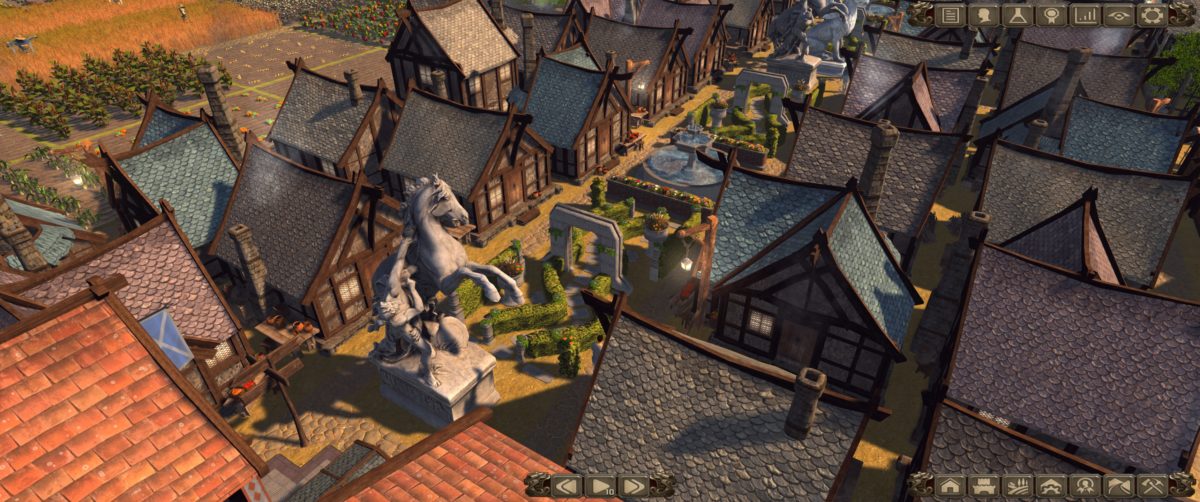
I picked up Patron during Steam’s winter sale because it was cheap ($8), had decent reviews (75% positive), and it sounded like it’d be my sort of thing. After playing long enough to earn all the achievements, I’ve found that while it’s not bad, it’s lacking a lot of things that could make it great.

I’ll start off with the positives: Patron looks good, has a nice ambient soundtrack, and the UI serves to get the job done. There’s plenty of stuff to build, from a handful of houses to a few dozen town and production buildings; most with some purpose in your town. Many of those buildings can be upgraded to either increase their production, lower their upkeep, or increase their workforce, allowing you to spend resources to improve existing buildings instead of building new ones. At your town hall, you can set various decrees that have global effects like increasing production or reducing upkeep, which is a nice touch.

Surviving the first winter took me a few tries just to get the balance right. You really just need shelter, food, and firewood, but the hardest part is getting that done with the handful of peasants you start with. However, once you’re past the first winter, the game becomes pretty easy; the most difficult part is keeping up with housing as more and more people come to your town. After building out my first town with a few hundred houses, I decided to just quit and let the homeless leave once they were fed up.

And before I get to the negatives (which are going to be plentiful mostly because they’re easier to talk about), I want to reiterate that Patron is a decent survival city-builder in the vein of Banished. However, I think Patron ends up closer to the bottom when compared to similar games like Banished and Farthest Frontier.

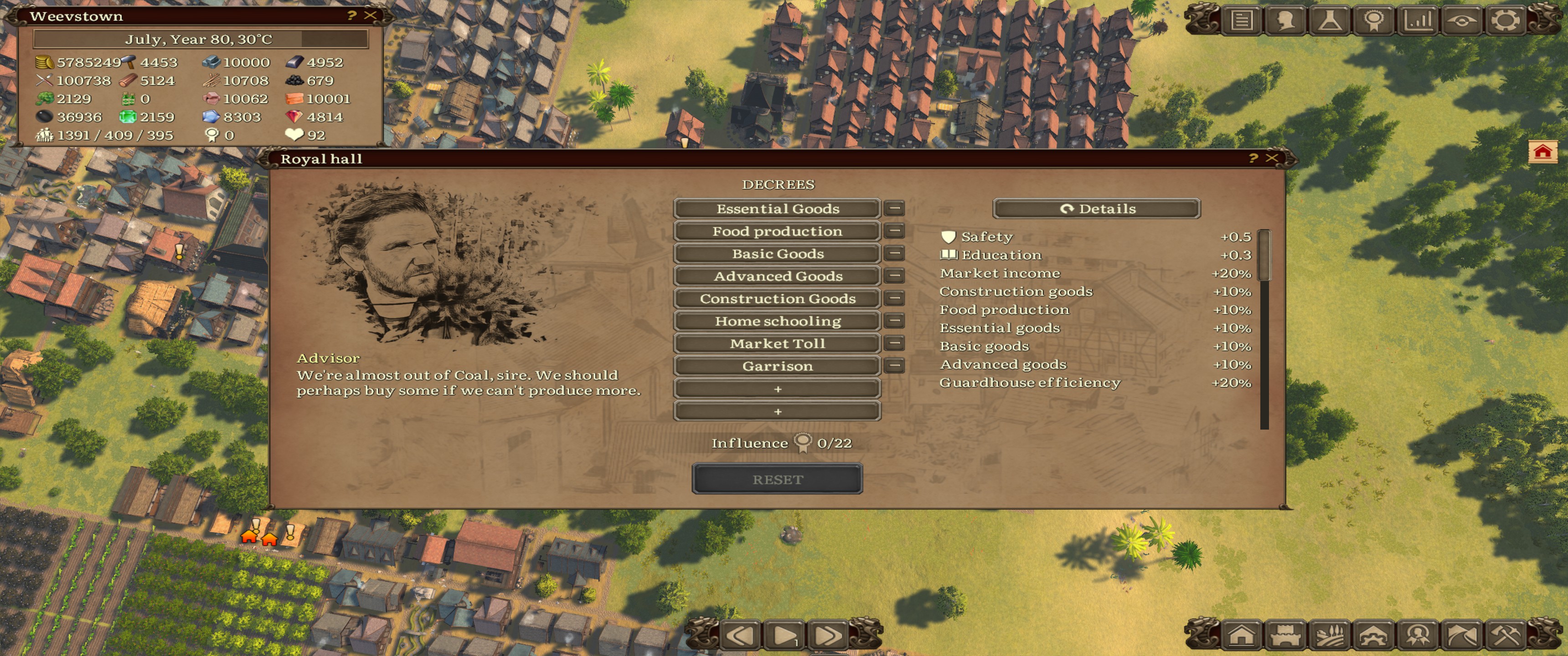
This guy was always complaining about coal.

Most of what’s wrong with Patron comes down to annoyances due to a lack of information in the UI. Survival city builders, by their nature, involve a lot of resource management – you need to know what you’re producing, how much you’re producing, where it’s going, etc. While Patron’s UI exposes a lot of this information, sometimes it’s lacking in ways that completely shut down production chains.

Let’s take something as simple as breadmaking. To make bread, you need a windmill to turn the wheat to flour and a bakery to turn the flour to bread. The UI says my fully-upgraded windmill will take 1750 wheat and turn that into 3950 flour per year. Likewise, the UI informs me that the bakery will take 750 flour and 750 firewood to produce 1881 bread per year. However, despite sitting on tens of thousands of wheat, my bakeries are sitting idle, unable to get their resources. Beyond an exclamation point telling me that there’s a problem getting the resources, I’m left bewildered as to what the problem may be. The mill and bakery are literally next to each other, with a depot a short walk away for deliveries from the stockpile. I ended up solving the problem by just importing flour when I was below a certain amount.

There’s likely a very logical reason why things aren’t running as smoothly as they could be, but there’s nothing to tell me what’s wrong. Maybe the workers need to live nearby? But I have no control over where people live, and they don’t shuffle around to live closer to their jobs, so that seems like an odd requirement.

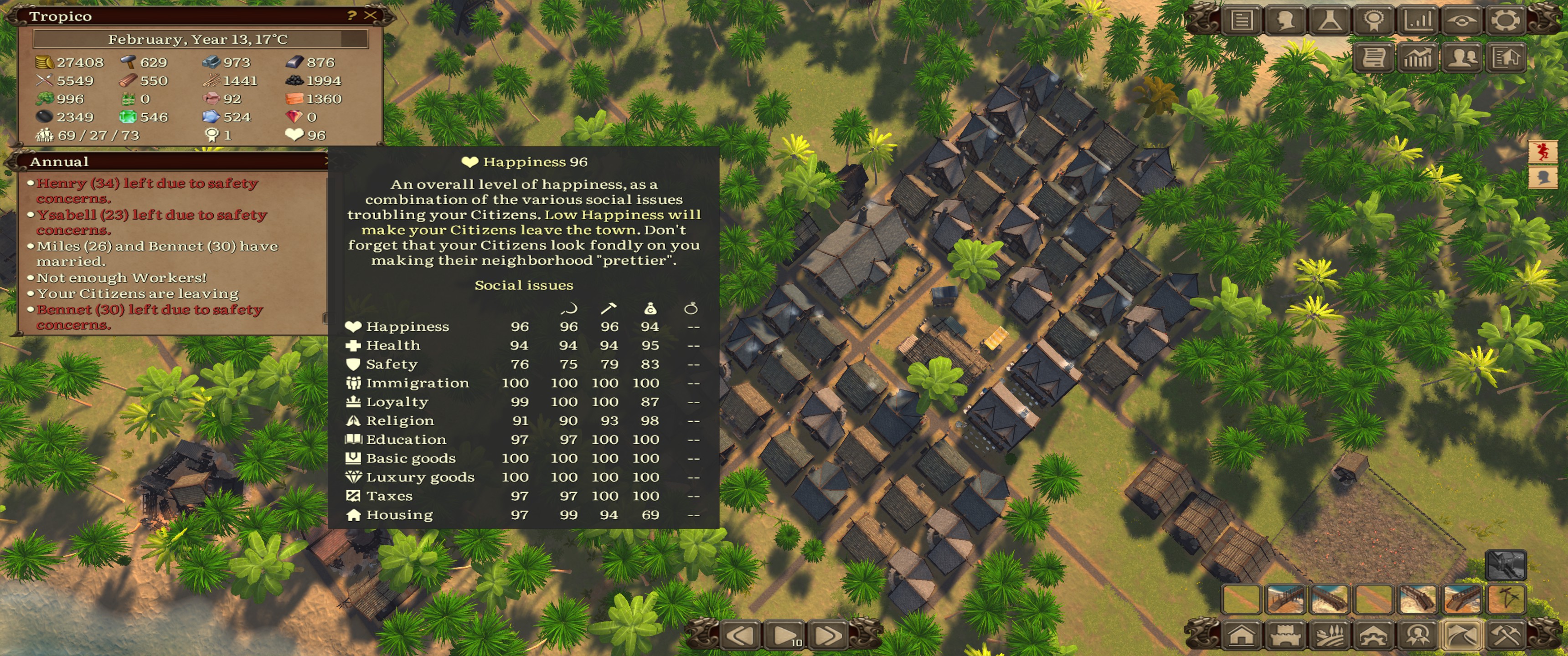
Fine, leave! I didn’t want you here anyway!

Another problem I faced was with people who were upset about something in my town, typically safety, but the town had high satisfaction in that area. My assumption is that while my citizens were happy on average, there were one or two people who were completely unhappy. But again, there’s no way to tell that – all you ever see are averages unless you click on every individual house to see the satisfaction for the family there, and I’m definitely not doing that.

Concerns like safety can be raised by building certain structures – guardhouses or watchtowers for safety – and while they work just fine, there’s no way to see an overlay of what areas are covered by a structure. When building a new one, I can see its effective radius, but I can’t see if there are any other buildings covering the same area. This has led to me placing redundant buildings near each other.

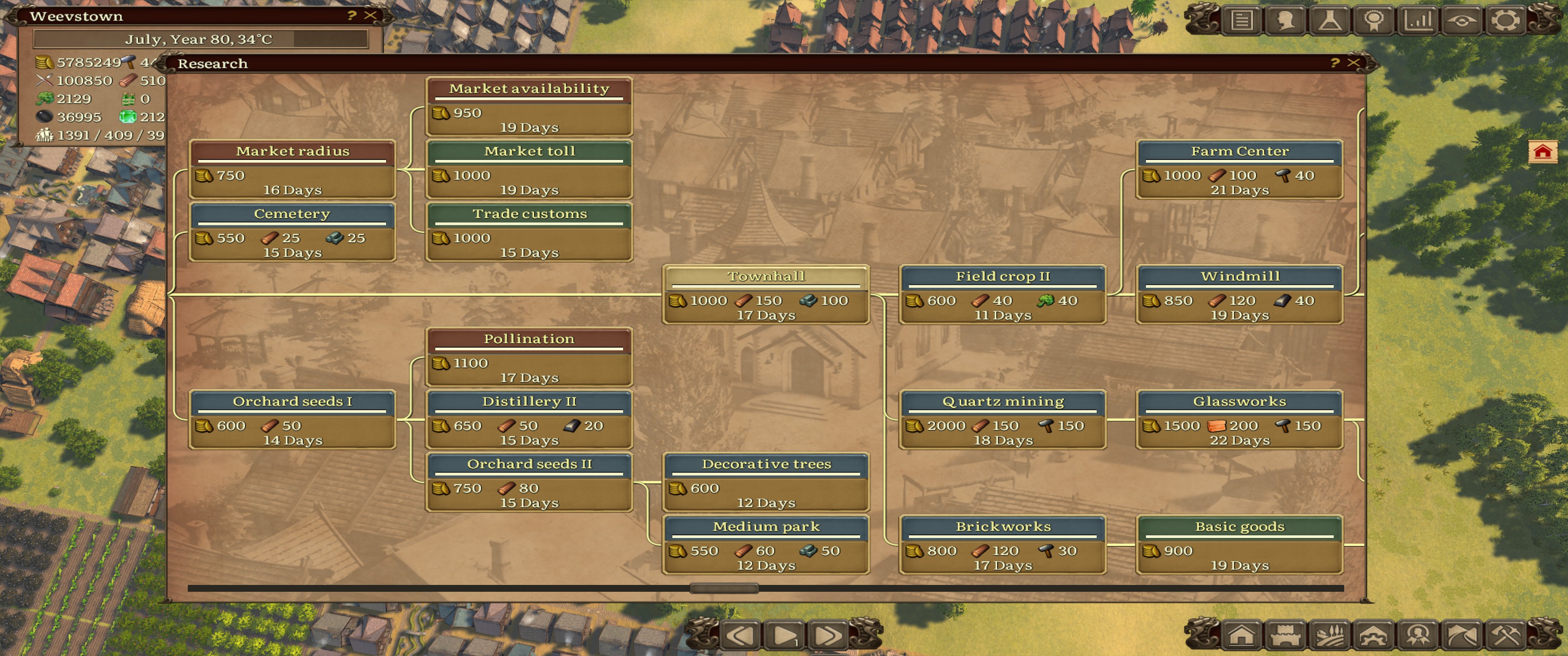
The tech tree is pretty chaotic as well. There are some things that have nonsensical requirements (not sure why I need a university before I can unlock the last crops), and other things have requirements in separate branches (so you can unlock them before being able to produce the resources to build them). I think this is just a limitation of how the tree is arranged, being very short and wide, so things were shuffled around to put them later on the tree even though they require things from earlier on the tree. There’s also no easy way to search for anything, so while the deep research tree could be a great way to keep things interesting, it ends up being another annoyance.

Get used to the job board. You’ll be looking at it a lot.

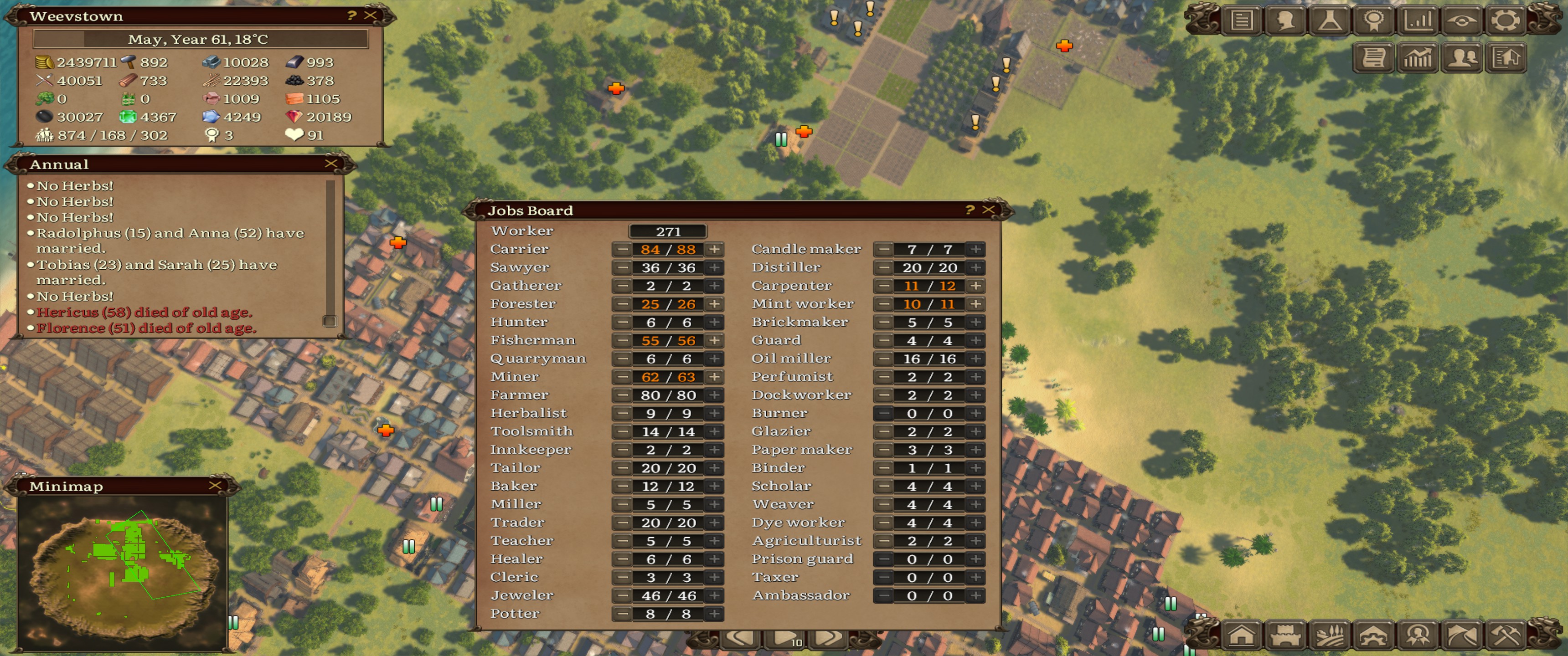
And finally, my biggest annoyance: the job board. I’m going to compare this to Banished since it’s the easiest comparison. In both Patron and Banished, the job board serves to set how many people you want working in each profession, with any leftovers in a general “worker” category that transport resources and build structures. Where they differ, however, is what happens when you lose a worker. In Banished, if you had 5 workers assigned to woodcutting and one died, a worker would fill their place (unless you had no workers remaining, in which case the job would be left unfilled). In Patron, when a worker dies, nothing happens. You just have one fewer worker in that profession. Your production dips, and if you’re not careful, wreck a nicely-balanced system. So you’re left micromanaging a UI just to keep things all the jobs filled.

Making sure all my houses are insulated…

Also, while being able to upgrade buildings is interesting, having to upgrade every single house with insulation became very tedious late-game.

Though even with the UI being a pretty frequent annoyance, I still found the game to be pretty easy (on normal difficulty). Beyond the first winter, things were simple, and I just kept building new things whenever I was low. Like a lot of these games, the key is just stockpiling huge amounts of every resource. Even if you’re having a hard time producing something in sufficient quantities, you can just import it from the harbor, since you’ll have plenty of coin to burn anyway.

So unfortunately, while Patron does have some things going for it, it’s hampered by its poor UI and some odd systems. The annoyances are relatively minor but frequent and numerous; death by a thousand cuts. In the end, I’d only recommend Patron to someone desperate for a Banished-style city builder, but there are numerous other games that fill the space better: Banished itself and Farthest Frontier immediately come to mind.

Categories
Games

Games of 2022

Legend
🌟 A personal favorite. (Not necessarily for everyone.)
✔️ Beat the game.
👍 Recommended if you haven’t played it.
👎 Avoid it. It’s terrible.

PC

Satisfactory 👍🌟

Star Trek Online
As much as I love flying around my favorite Star Trek ships, I think it’s time for me to leave this game behind.

Destiny 2 👍🌟
February saw the launch of The Witch Queen expansion, which was generally pretty great, though weapon crafting was a bit underwhelming.
May introduced the Season of the Haunted, which brought back a much-loved location and set of weapons as well as a rework of the Solar subclasses. Weapon crafting was simplified and aerial weapon combat was changed with the introduction of an “airborne effectiveness” stat.
August brought the Season of Plunder, a pirate-themed season with a fun new activity and some great new weapons to collect and craft. The story brought back Eramis and delved into Misraaks’ backstory (and he’s one of my favorite characters, so I enjoyed it). Aside from some annoyances with the seasonal activity and seasonal quests, it was a pretty solid season.
December kicked off the Season of the Seraph, revolving around the AI Warmind Rasputin. Some great weapons and interesting new mods this season.

No Man’s Sky 🌟
The Exobiology Expedition was fun, with a focus on companion pets.
The Outlaws expansion added a new ship type (solar sail ships) and new “outlaw” stations in certain systems. Turns out my primary base and settlement were in a system that turned outlaw, so they suffer from frequent pirate attacks… Might need to relocate.
The Blighted Expedition was a little slower, with a focus on some of the new Outlaw mechanics. The addition of capes was popular.
The Leviathan Expedition was a rogue-like with permadeath and restarts. I’ve never been a fan of permadeath in games like No Man’s Sky – physics engines can produce a lot of hilarity but also randomly bug out. I died once because apparently my gentle landing wasn’t considered as such by the game…
Toward the end of the year, there was a big update that completely changed the inventory system and gave players much more control over the difficulty of the game. I’m not sure how I feel about all the changes, but it’s nice to see that Hello Games is still working to improve the overall experience.

Everspace 2 🌟

Timberborn 🌟

MechWarrior 5: Mercenaries

Vampire Survivors 👍
The name is a little weird, but the game is a lot of fun. I feel like this one appeared out of nowhere and got a lot of people’s attention; and the $3 price tag didn’t hurt.

Airborne Kingdom 👍✔️
I remember seeing this game about a year ago when it was exclusive to the Epic Game Store. Finally released on Steam and I immediately bought it. A fun survival city-builder with some interesting mechanics and a relatively short story.

Planet Crafter
A survival game where the objective is to terraform a planet. You explore, scavenge shipwrecks, gather resources, build bases, and construct equipment to terraform the planet by increasing its temperature, pressure, and oxygen levels.
A few updates over the year brought additional terraforming levels and new lore. Still a lot of fun and a very chill experience.

Nebuchadnezzar
Economic city builder set in Mesopotamia. It’s all about managing your economy to bring in settlers, then building monuments to your gods and such.

Lumencraft
A bit similar to Rift Breaker: mine resources, survive waves of bugs.

Surviving The Aftermath
Another post-apocalyptic city builder. I really like the Civilization-style overworld map, but there were several small things that annoyed me. Endzone is better (more like Banished).

Teenage Mutant Ninja Turtles: Shredder’s Revenge 👍🌟
A modern refresh to the class TMNT arcade games. It plays great, feels like the originals, and has a ton of callbacks to the original games and cartoon. The animation is excellent, with lots of tiny details.

RAD
An action roguelike from Double Fine. A lot better than I expected.

Hardspace Shipbreaker
Came back to this after playing it in early access. I like the untimed mode with unlimited oxygen since I get a lot of satisfaction from using every part of the spaceship.

Deathloop 👍🌟✔️
I had heard about Deathloop being great, but was hesitant to try it. When it appeared on Game Pass, I gave it a try and loved it. The story is told slowly as you discover new things with each new loop, with a lot of great dialogue. You can play stealthy or charge in guns blazing (or a little of both, which is what I usually end up with).

Slime Rancher 2
It’s more Slime Rancher, with adorable new slimes.

Against the Storm 👍🌟
A roguelite survival city builder. This game quickly became a personal favorite, and is extremely well-polished, even in Early Access.

Ghostbusters: The Video Game Remastered
I loved the Ghostbusters game when it came out in 2009, and chose to pick up the remastered version on sale so I could play it on the Steam Deck. Plays great, looks good, and it’s as fun as I remembered.

Fallout 76 👎
Came back for the 25th anniversary event and a month of free Fallout 1st membership. Couldn’t hold my attention for a week.

IXION ✔️
I love IXION, but don’t feel it’s quite ready to recommend – there are some pretty big bugs that need ironing out. In a few months, I think this will easily turn to a recommend.

Mars Horizon
Simple space program management game. Fun to play when I want something more casual.

Nebulous: Fleet Command
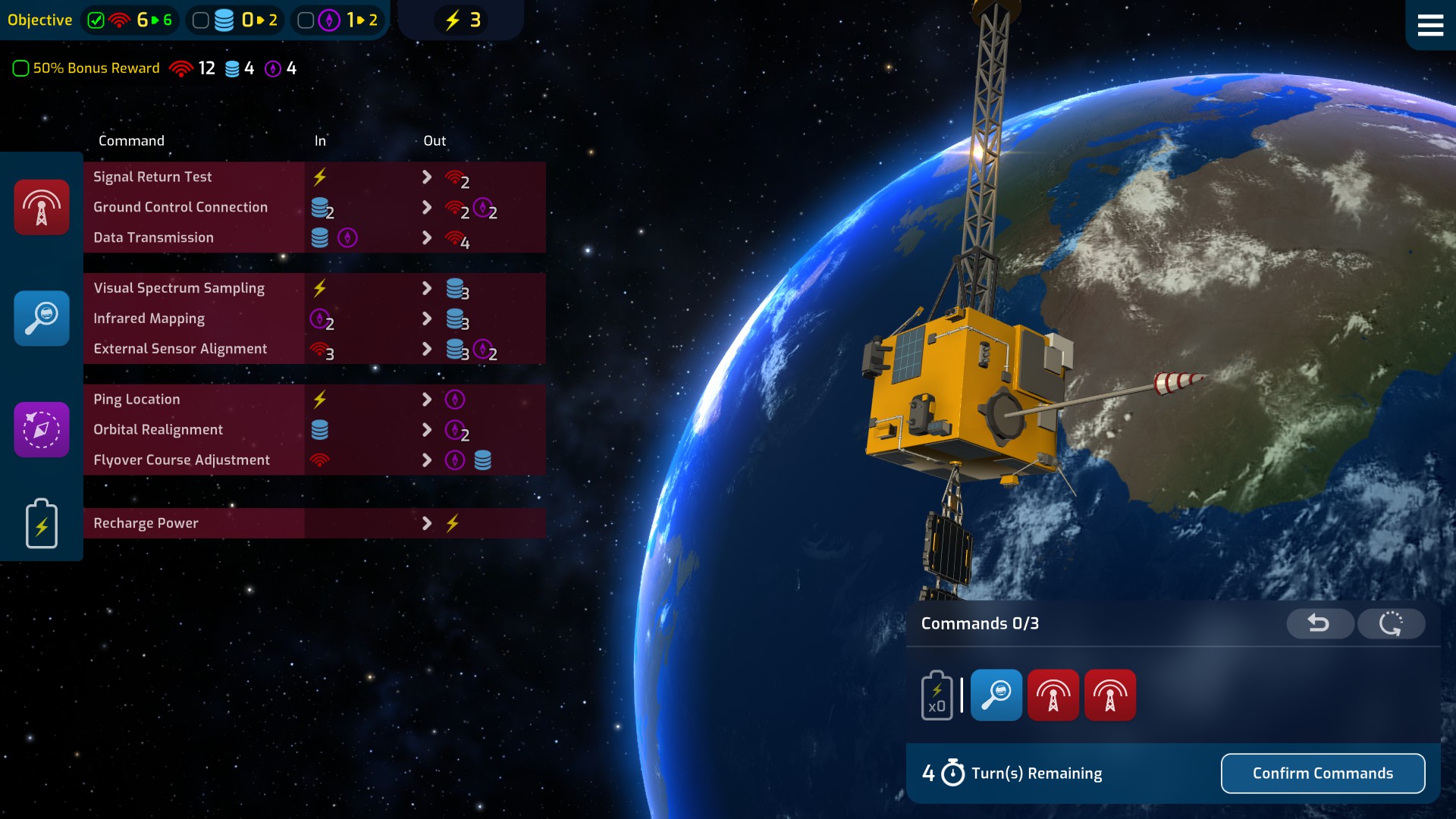
I so badly want to love this game, but I couldn’t. Maybe once it’s out of Early Access if the controls get improved a bit and there’s more content.

Dice Legacy
Bought cheap. Refunded because it didn’t seem worth it even at $6. Turns out extra RNG doesn’t make survival city builders more fun.

High on Life
A fun FPS with a lot of Justin Roiland’s brand of humor. If you’re a fan of other Squanch Games titles, you’ll enjoy it. There is a lot of dialogue, including a lot of background elements that are fun to listen to.

Megaquarium👍
An amazingly clean, simple management game about building aquariums.

Clanfolk
Basically Rimworld, but with a single family instead of a colony of survivors. Getting through the first winter is pretty tough.

Starcom: Nexus👍✔️
A fun sci-fi adventure game where you get to build and upgrade your ship.

Arcade Paradise
Manage your family’s laundromat while building an arcade in the back rooms. And each arcade cabinet you add is a fully playable game based on real games. (For instance, the Pac-Man clone is basically GTA, where the ghosts have been replaced by cops and the dots are cash.) Great to play on the Steam Deck. I haven’t gotten far yet, but I’m enjoying playing all the games.

Kingdom Rush: Vengeance👍
I’ve always enjoyed Kingdom Rush, and this is more of it from the villain’s perspective.

Battlefleet Gothic Armada 2
Bought cheap after seeing a glowing recommendation on YouTube. I played a bit of the first and enjoyed it, so hoping to get some mileage out of this one.

Ember Knights
Another game bought during the Steam Winter Sale. Fun action roguelite.

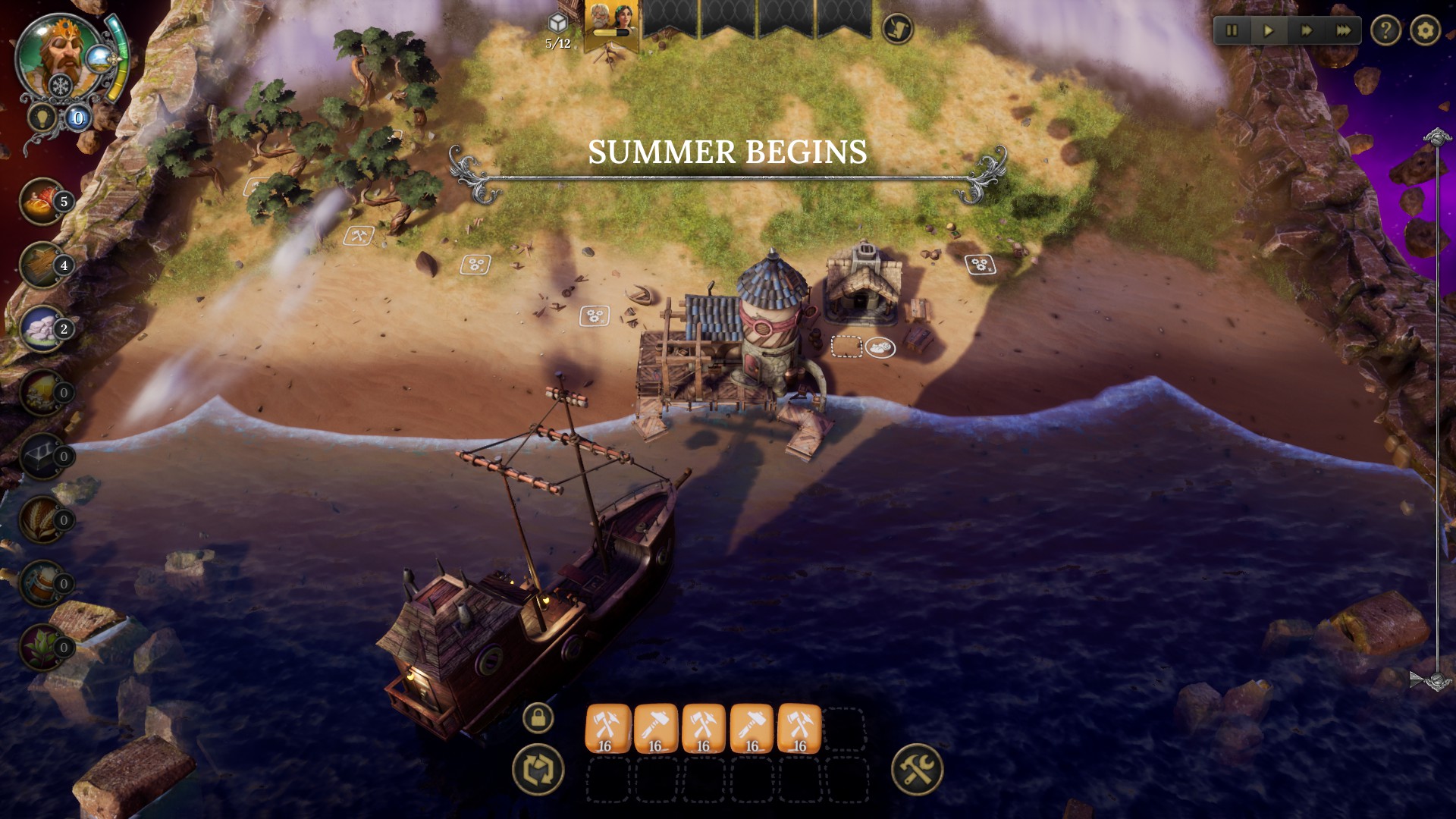
Patron
A city-builder in the vein of Banished.

Demos

I played a lot of demos throughout the year during Steam’s “fests”, and instead of re-hashing thoughts here, I’ll just link to those posts:
Survival Fest
Next Fest (October)

Exogate Initiative (Demo)
If you’ve ever wanted to pretend you’re running Stargate Command, this is the game for it. Heavily Stargate-inspired, with Evil Genius and Dungeon Keeper influences for the base building. The “choose-your-own-adventure” style missions your teams go on are great. Excited to play the game once it’s released.

Astro Colony (Demo)
Played a demo of this one during one of the Steam Next Fest events. It’s like Raft in space. I’ll definitely pick it up at some point.

VR

Battlegroup VR

Ragnarock 👍
A rhythm game where you play a set of drums on a Viking longboat to spur on the rowers. The entire soundtrack is metal, and the visuals are appropriately epic. My new favorite rhythm game.

Board Games

Chai: High Tea
Played Chai with it’s expansion, High Tea. The expansion just adds an extra ability for each player; nothing too dramatic, and typically only sometimes useful.

Mysterium Park 👍
A smaller version of Mysterium that’s a little easier and faster to play. The carnival theme is great.

Codenames Duet 👍
We’ve had this one for a while but apparently never played it. A great two-player variant of Codenames.

Dungeon Drop
A quick and easy dungeon crawling game where you create the dungeon by dropping a bunch of colored cubes onto the table. There’s some fun strategy to the game, with special abilities and hidden objectives helping balance things out a bit.

Epic Death!
One last play of this game before deciding to sell/donate. It’s about how I remembered; not terrible, but also not very good.

Dungeon Scroll
Another “one last play” game. Needs a bonus for longer words – my wife would regularly outplay me with longer words, but I won with words like “jab” because of high-scoring letters.

Tussie Mussie 👍
A wallet game from Button Shy Games designed by Elizabeth Hargrave (Wingspan) with art by Beth Sobel (Wingspan, Cascadia). Beautiful, quick, and fun to play. My wife made a meta game of reading what the arrangements meant. I think one of my favorites described a relationship going bad: “We belong together, I love you, We are good friends, You have deceived me”.

Decorum 👍
“A game of passive aggressive cohabitation”. This game was fantastic. It’s essentially a puzzle game with limited communication. You’re trying to decorate a house with the other players, but you each have preferences that you’re not allowed to tell anyone (aside from during a few special “heart-to-heart” rounds). After a player makes a change, you’re allowed to make a single, simple comment like “I love that” (when something fits your preferences) or “I hate that” (when something doesn’t) or “Whatever” (if you don’t care). There’s a set of 20 two-player scenarios and a set of three- or four-player scenarios that you can play through. Some are easy, and some are really difficult.
We played this with family over Christmas, and we found that playing with 4 players is extremely difficult. The fun 20-30 minute games of the two-player campaign became a 2-and-a-half hour slog. When we finished, we even had a hard time coming up with exactly what was needed to solve the puzzle.
So while Decorum is fantastic with two players, it might need some house rules to make the 3-4 player campaigns less aggravating.

Dinosaur Island: Rawr and Write
A roll-and-write game where you get to build a dinosaur theme park. Pretty easy to play after a round or two. The initial options seem restrictive, but the short length of the game means you’re not going to be able to do everything anyway. Quick and easy to play.

Don’t Go In There
A simple worker-placement style game where you play as kids exploring a haunted house.

Railroad Ink Challenge: Lush Green Edition
An easy to play roll-and-write. I like the dry-erase boards so I don’t have to waste so much paper.

Castles of Mad King Ludwig
I’ve always enjoyed Castles of Mad King Ludwig and kickstarted the collector’s edition, which has some really nice components and a great storage system.

Spirit Island👍
I love the theming of Spirit Island, and it’s a lot of fun even though my wife and I lost our first game.

The Captain is Dead
A colorful sci-fi game where you play as the crew on a spaceship where the captain is dead and hostile aliens are attacking. My wife and I had a lot of fun. The game is easy to play and feels right – you’re scrambling to keep things working and repair the jump drive so you can get away. Our first game ended in defeat, but we went down fighting.

Star Realms Deluxe Nova Edition👍
I’ve always loved Star Realms, and the Nova Edition is full of fancy foil cards. Had to buy sleeves for the first time in a very long time.

Patchwork
My wife and I play our Halloween edition of Patchwork every year on our anniversary.

Dice Throne and Dice Throne: Adventures 👍
Played the new Santa vs. Krampus expansion with my brother and then the first dungeon crawl of the Dice Throne Adventures campaign. Still love the system, and Adventures is pretty difficult.

Kingdom Rush: Rift in Time 👍
Played with my brother over the holidays. Still enjoy it; just need to find some more time to play.

Wingspan 👍
Played with my brother and his wife while they were over for the holidays. Still a great game.
Categories
Games Reviews

Review: Mars Horizon

I played the demo for Mars Horizon a while back and it had me interested. It’s definitely not Kerbal Space Program or Simple Rockets; it’s more of a space program management game than a rocket building game, with some interesting mechanics during space missions. Because of that, there’s some tedium in managing certain aspects, but nothing I’ve found to be too boring.

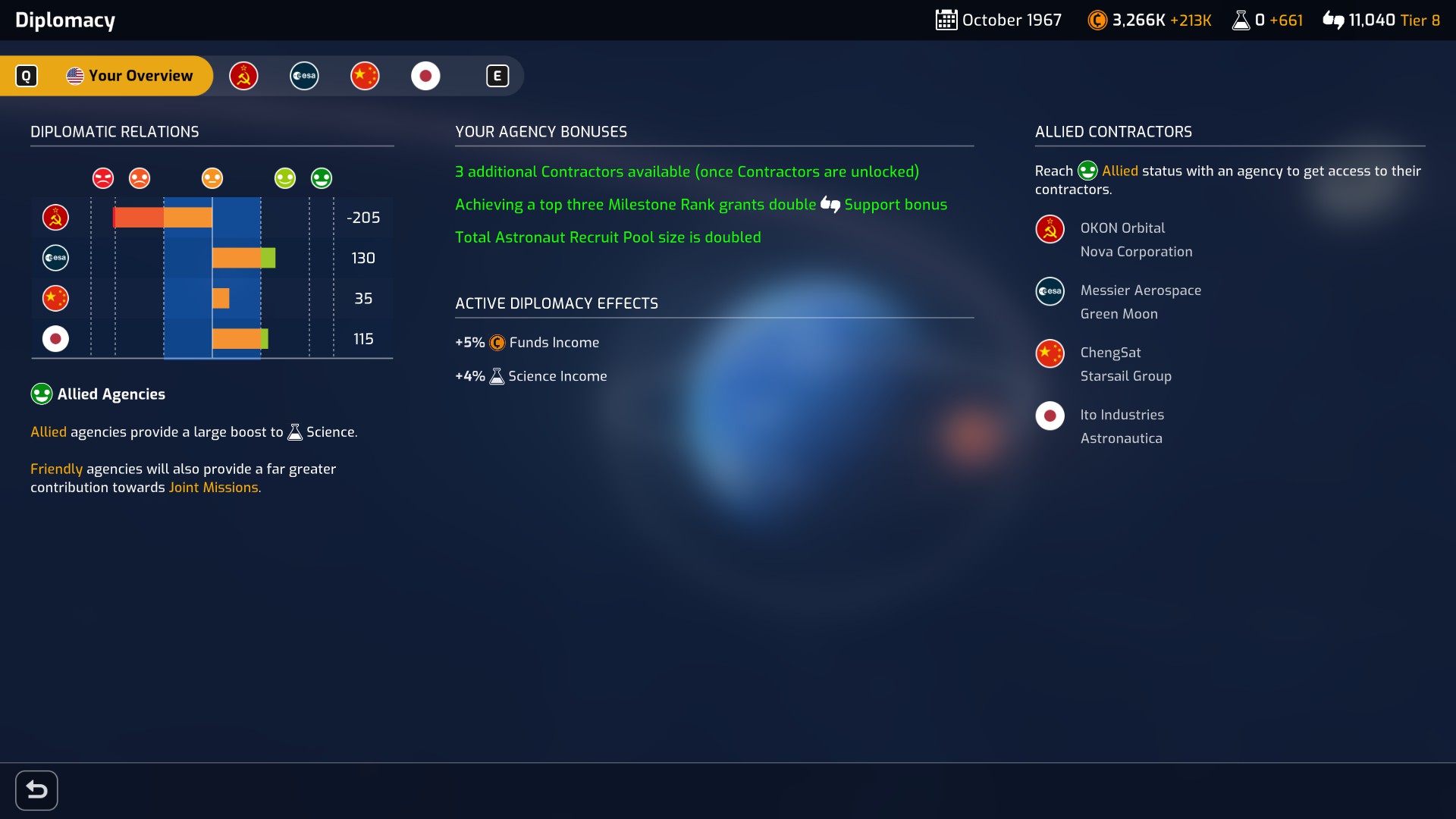
Mars Horizon puts you in charge of a space program. There are several real-world programs you can choose from (NASA, ESA, JAXA, etc.) or you can create your own with custom perks. Each has slightly different bonuses, but none have a custom campaign: you’re simply participating in the space race. There’s also diplomacy, where you get bonuses for good relations and a funding increase for poor relations. You can also participate in joint missions, where you both get a bonus afterwards. Though for most of the game, the other agencies are opponents you’re trying to beat to each milestone.

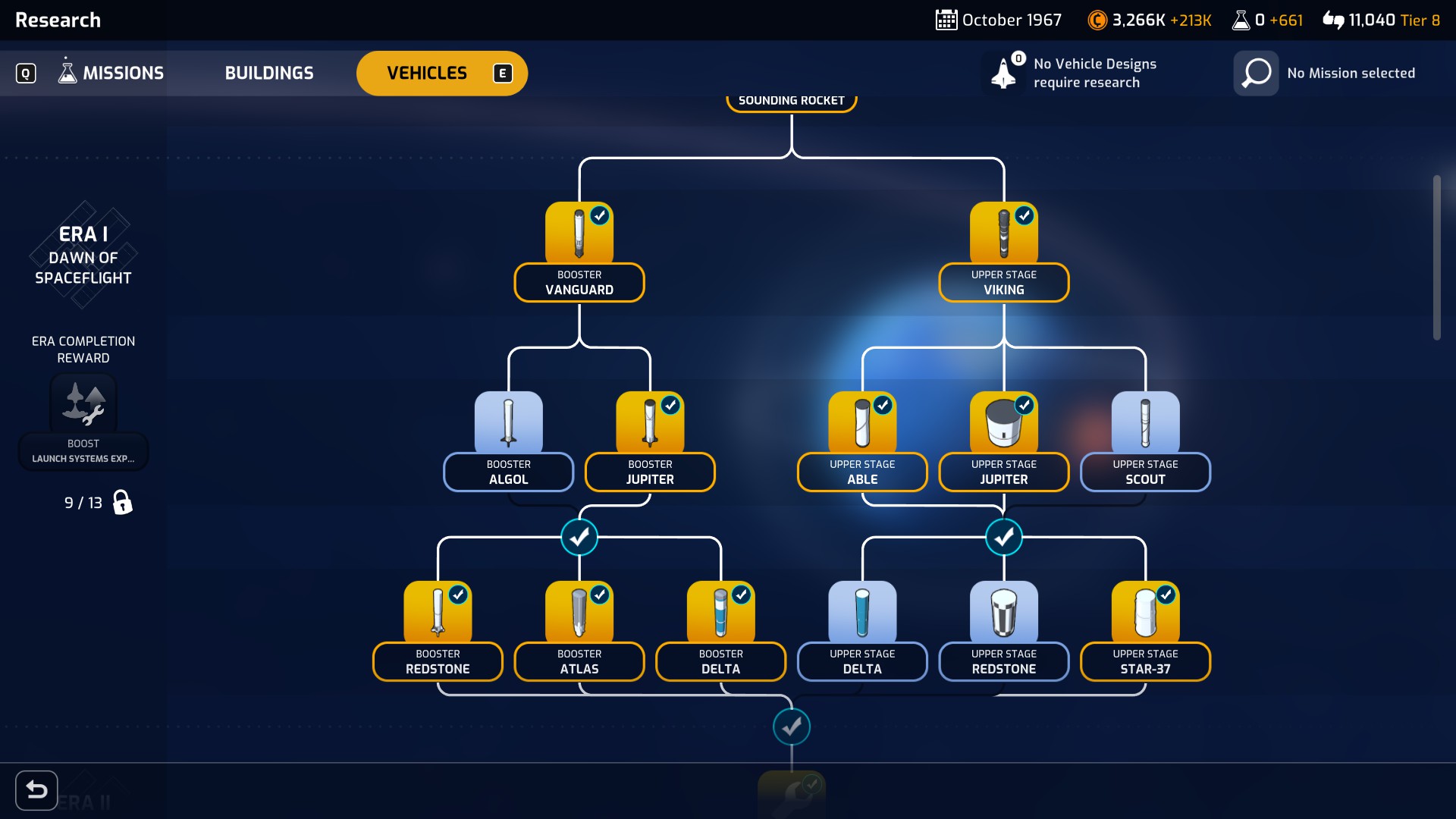
Like the space programs, the tech tree unlocks real-world rocket parts and missions. Your first milestone mission tasks you with launching an artificial satellite. Beyond that, there are many options, and you can either attempt to beat everyone to major milestones (first person in space, first person on the moon) or attempt everything available. Playing NASA, I launched my “Laika” rocket putting an animal in space instead of pursuing the first lunar orbit. There’s no need to follow historical events here, though it’s often important to be the first to reach an objective, since there are bonuses for the first three to complete a new mission.

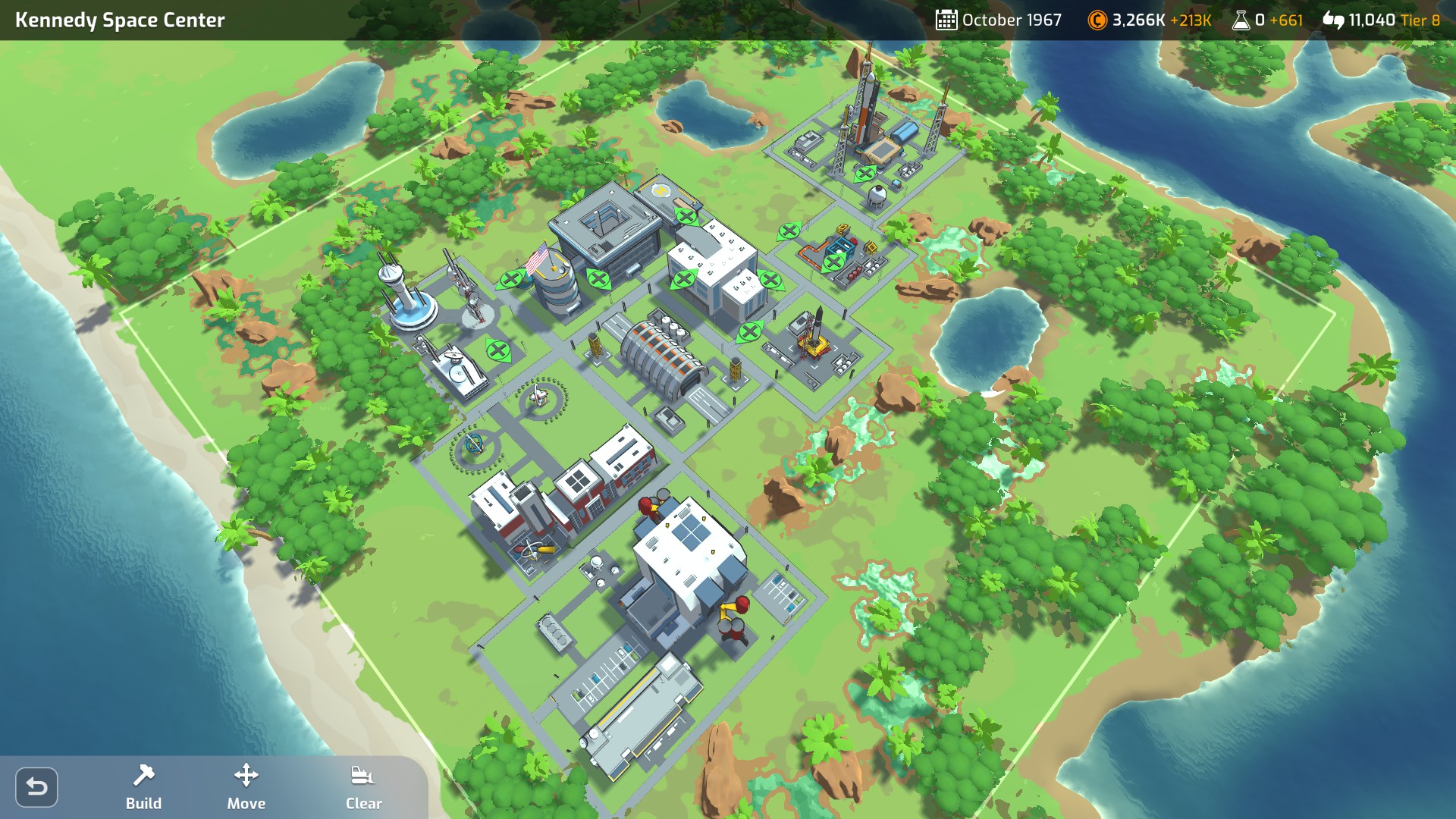
Alongside the rockets, you get to build up your space center, researching new buildings and constructing them to improve your capabilities. There’s a bit of a puzzle to the base building, as buildings can have adjacency bonuses, encouraging you to keep certain buildings touching and others apart from each other. I’m sure there’s a guide somewhere that details the optimal space center layout, but the bonuses aren’t so dramatic as to require perfect placement.

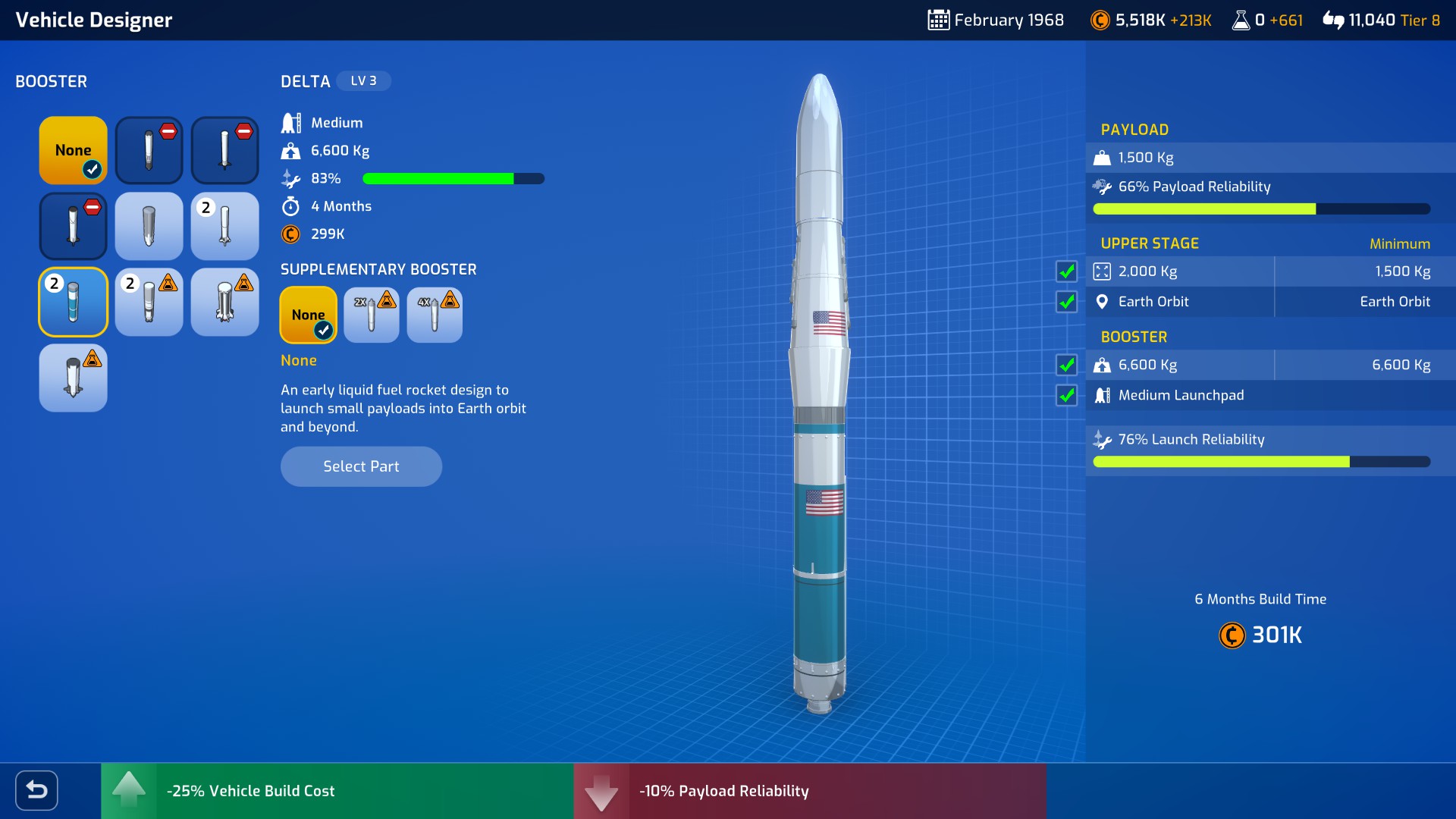
When you decide on a mission to pursue, you have to build the payload and rocket, selecting from the parts you’ve unlocked. You can also select parts you haven’t researched, and the game will indicate those in the research tree to keep track of which you need for the mission. Each part you select has various stats, the most important of which is its reliability: the more reliable a part is, the less likely it is to fail during a mission. Your parts will level up as you use them, becoming more reliable with each launch, but the most reliable parts are also the most expensive to build.

Once you’ve got your rocket constructed, it’s time to prepare the launch. You get to select the crew (for crewed missions), a launch bonus that increases the longer you wait before launching (like bonus reliability), and a launch date. While you can select any launch date you’d like, there are certain months where the conditions are more favorable; selecting an unfavorable launch window penalizes your reliability.

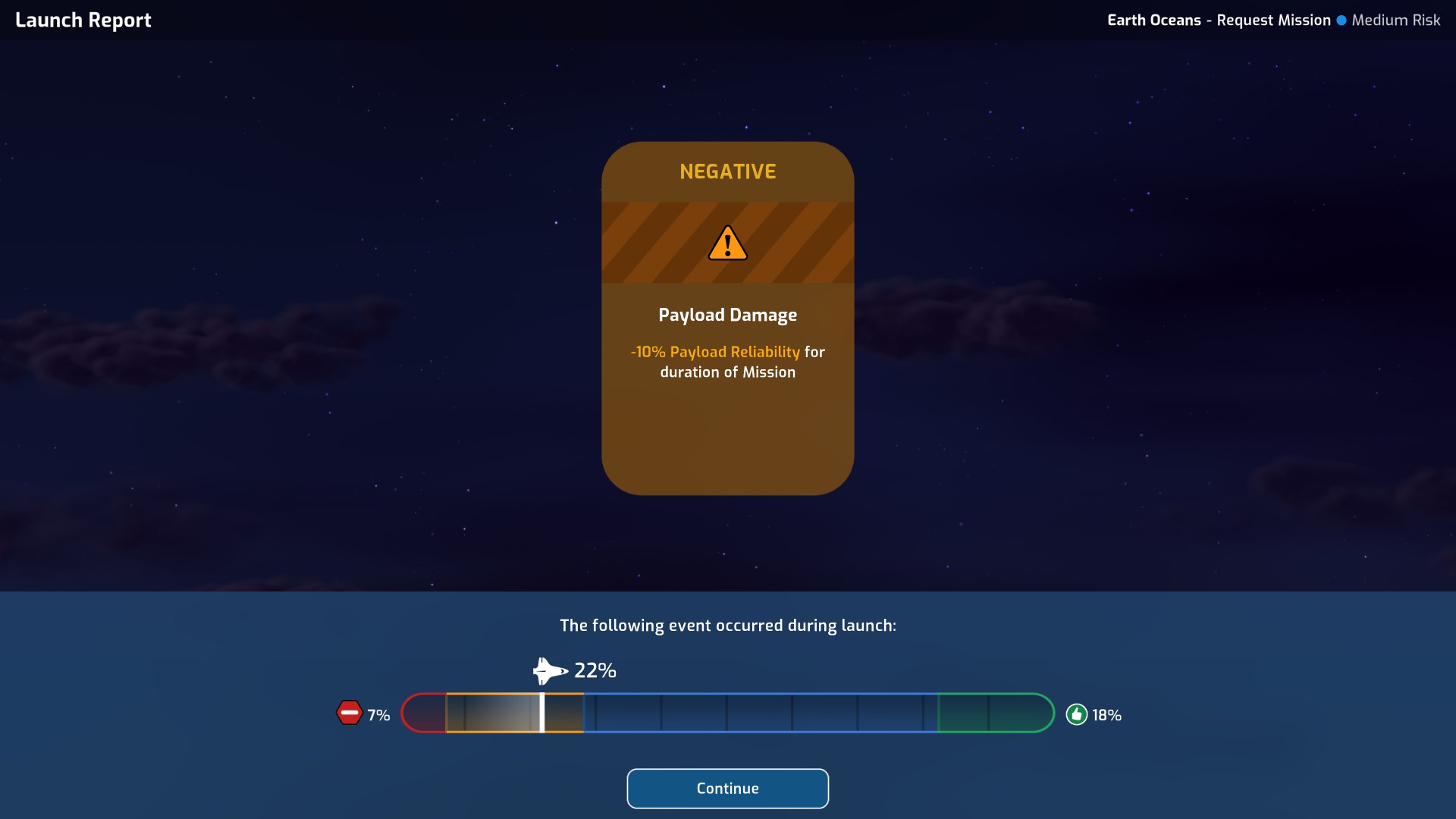
When it comes to the actual mission launches, there’s a lot of RNG. There’s a roll to determine how the launch goes (failure, negative, normal, or positive) with a penalty or bonus depending on the value. A higher reliability makes it easier to get normal or positive results. I haven’t had a launch failure yet, but I’m sure it’s accompanied by a large explosion.

Once the mission is off the ground, there may be a number of phases where you manage resources in an attempt to achieve a goal. Each phase will have different resources you’re managing, and you only have a handful of turns to achieve the results. It’s a fun little minigame, but it can get boring after a while; though there’s an “auto-resolve” option that will determine the outcome based on the payload reliability. Like the launch, each command gets a roll to determine if it’s successful, with a bonus on a high roll and a penalty on a low roll (though you can use power to negate a penalty).

In other reviews I’ve read, the RNG of the missions is the biggest annoyance people seem to have with the game, but it doesn’t bother me. Even the most well-prepared mission can go awry, and at least the RNG is well-communicated rather than hidden as it is in most games.

Mars Horizons is very easy to play, and has some great visuals. You can skip a lot of the cinematics and UI animations to speed things up (some of the animations take their time). Everything is kept pretty simple – there’s no photorealism here – but is still attractive. While I’m not sure how re-playable it is, I love how accurate it is to real life (with several achievements for beating the real-world dates of several missions), and I know I’ll get plenty of playtime managing my space agency.

Categories
Games Reviews

Review: Nebulous Fleet Command (Early Access)

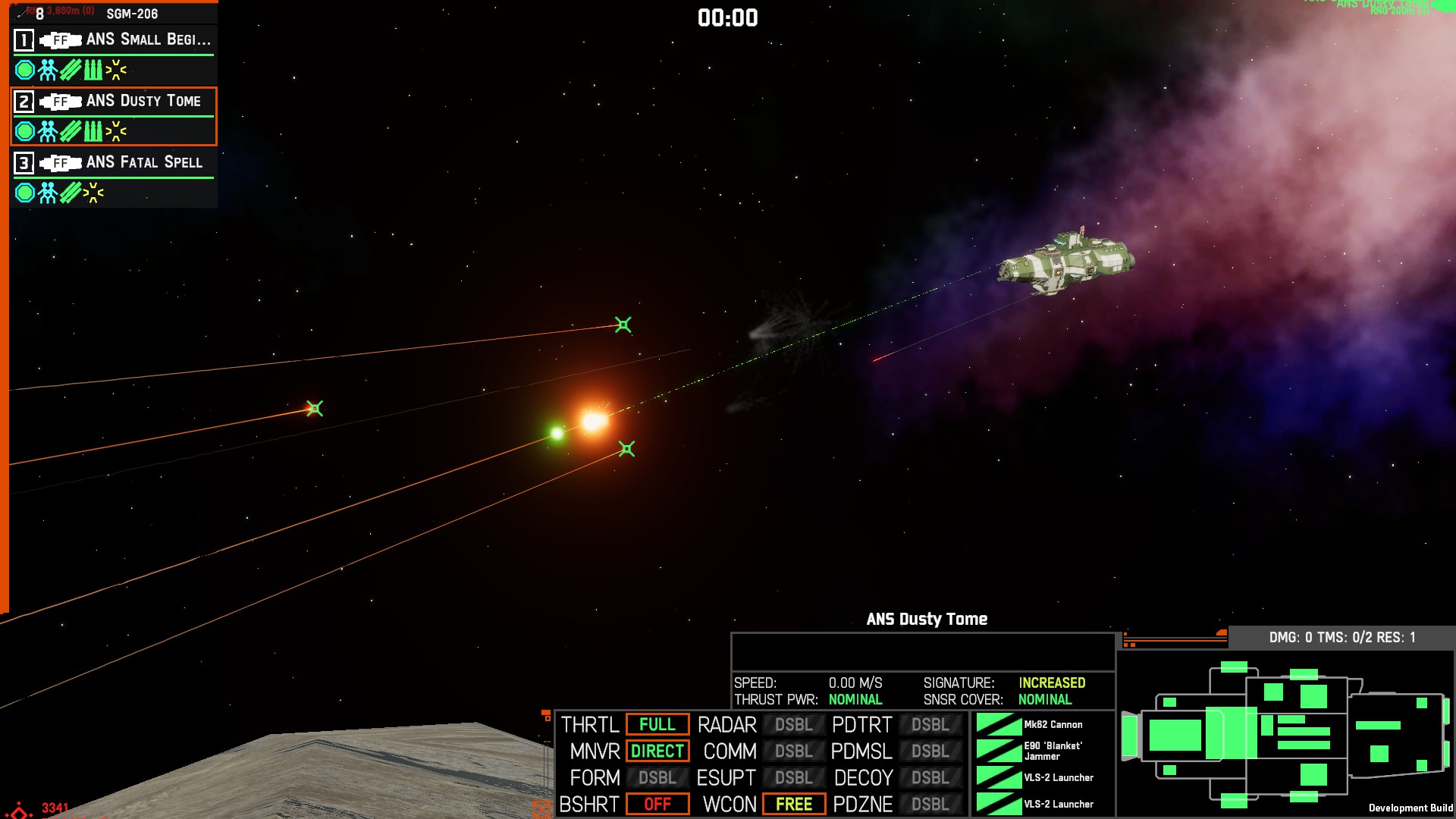
I really want to love this game. The realism and strategy are top-notch. Unfortunately, I find the controls very frustrating, resulting in accidental missile launches (forgot to hold ALT) and ships that won’t go where I want them to go (can’t get the right heading on the sphere). The lack of any sort of pause makes control issues worse because I can’t sacrifice extra time to correct mistakes (or cancel a missile launch).

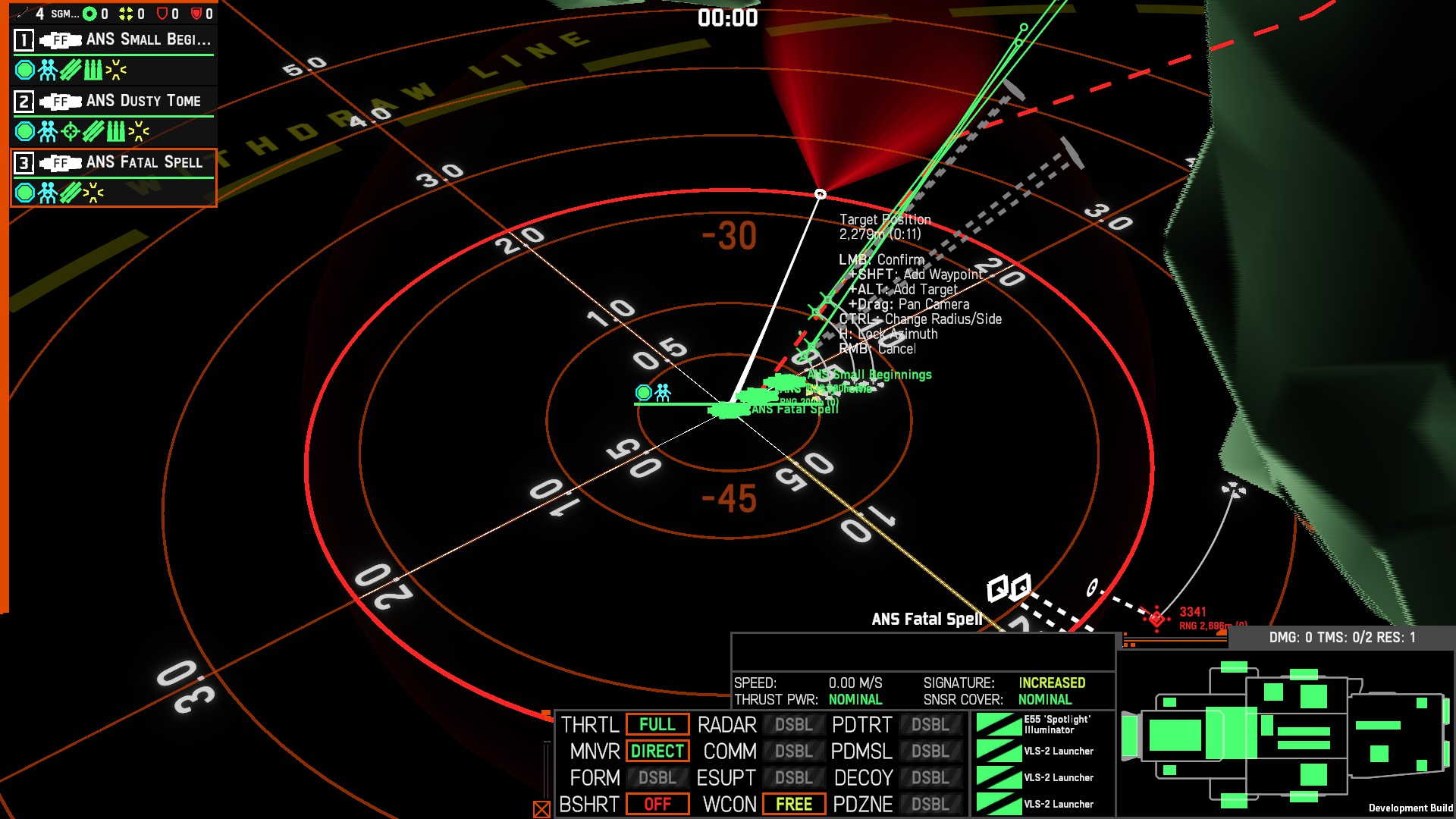
Using the targeting sphere to set missile waypoints.

The core interaction mechanism used for navigation is a targeting sphere, projected onto a 2D plane. It’s probably the best way to handle maneuvering in this sort of game (I’m fairly certain Homeworld does something similar), but I spend half my time swinging the view around to try to get things on the side of the sphere I need. Since maneuvering and positioning is such a core mechanic in the game, you interact with this sphere a lot, and I find it infuriating to work with. If the developers can find some way to make it a little more intuitive, I might be able to really enjoy the game.

Aside from the controls, there’s currently very little to the game. Eight tutorial missions, a skirmish mode, and multiplayer. There appear to be plans for a full campaign and a strategy mode where you vie for control of a solar system. There’s also the promise of modding support, which can add a lot to the game.
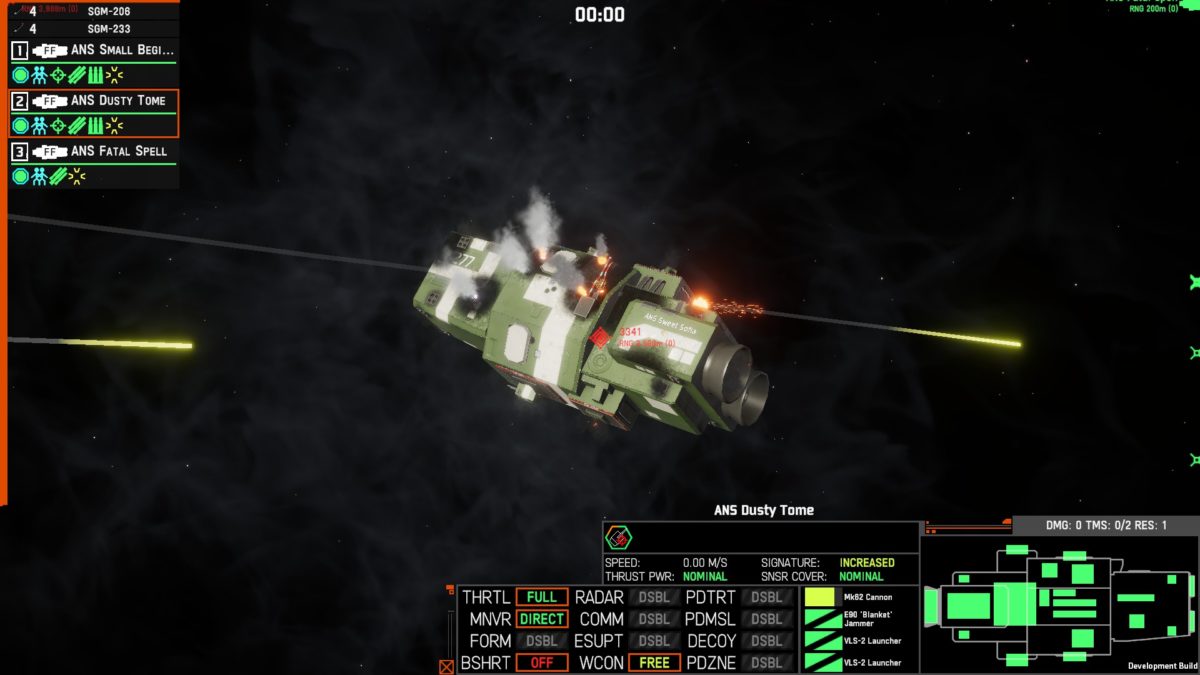
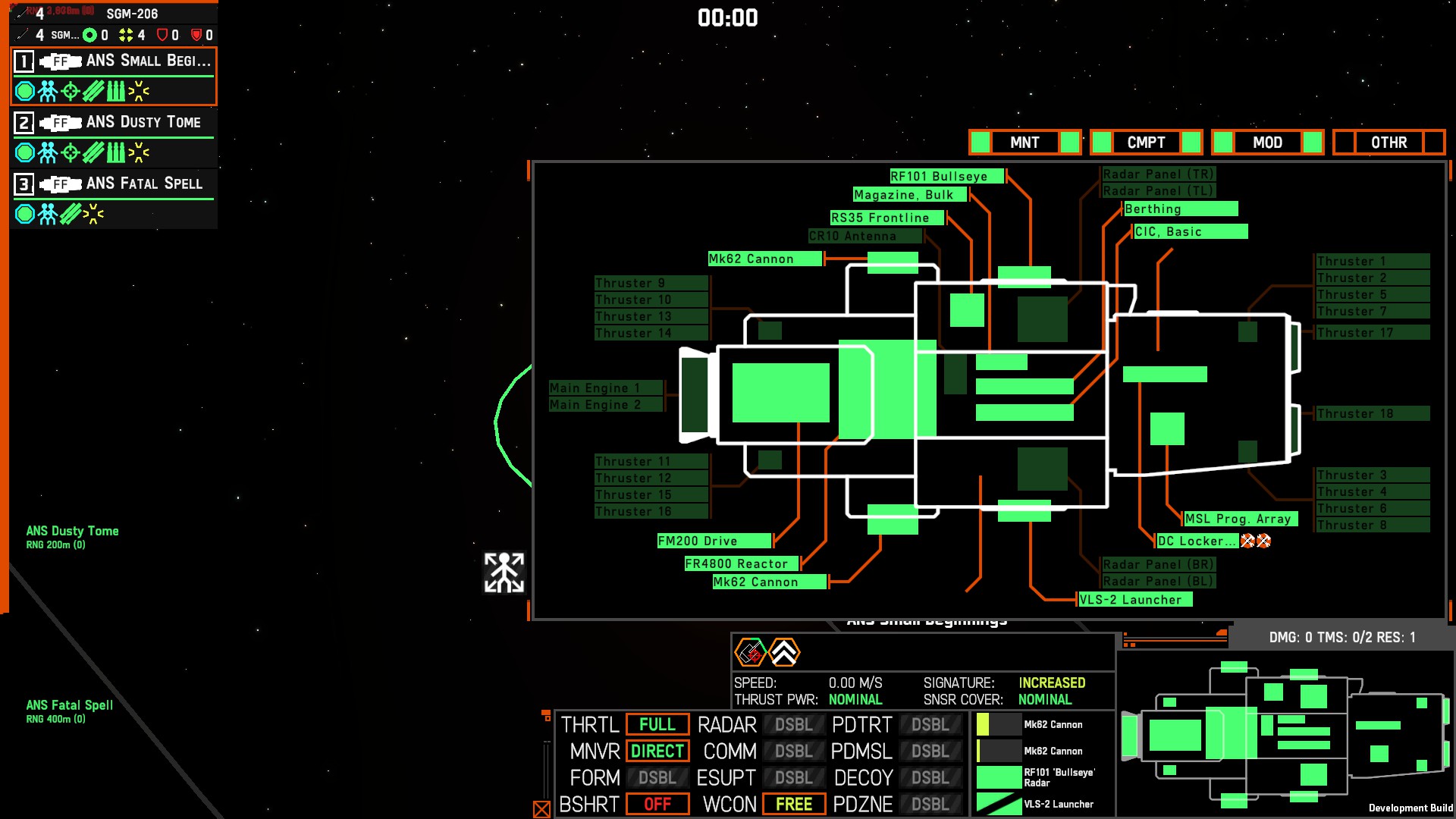
The damage control map, showing all the bits of the ship that can be damaged.

There’s a lot of depth to what’s here, though. Your ship’s mounts and internals can be damaged or destroyed, with repair teams travelling through the ship to make repairs (and those teams can be killed if the component they’re in is attacked). There’s electronic warfare and stealth mechanics. There’s a variety of weapons like missiles, cannons, rail guns, and lasers. You can customize ships to fulfill specialized roles and construct fleets for combat.

So while I can’t recommend the game as it currently stands, it’s a great foundation and I’m sure it can become something I’d really enjoy playing. The current price ($20) is a little high for what’s currently offered, but with the additions I mentioned above, it could definitely be worth it.

I just can’t get that damn sphere to cooperate.
Categories
Games Reviews

Review: Dice Legacy

I love survival city builders and I’m an avid board gamer, so you’d think Dice Legacy would be a perfect match, but even at a steep discount, I can’t recommend Dice Legacy.

The concept is definitely interesting. I could see this as a great physical board game. However, the pure RNG nature of the dice makes it difficult to plan or recover. Dice have a “durability” that decreases with each roll, and if you employ them at 0 durability, you lose them. Alternatively, you can send them to the cookhouse to eat and recover their durability. If a die doesn’t have the face you want or need, you have to keep rolling. I found myself often rolling multiple times in an attempt to get what I needed, but ended up just draining the durability of my dice. In the best dice-rolling board games, there’s some way to mitigate the randomness of a roll, but Dice Legacy lacks any way to alleviate a bad roll. At least at the start; there’s a broad tech tree and there appear to be some roguelite systems to permanently improve dice between plays, but I’m not really interested in suffering to get to that point.

This is how I lost my first game – buildings burning with no one to put out the fires.

The game is also extremely tedious, with lots of clicking to move dice around and place resources. The first time I placed a die in the cookhouse to restore its durability, I was confused because nothing happened. It turns out I have to click the “food” resource and click on the cookhouse to supply it with food. (I’m not sure why that couldn’t have just happened when I dropped the die.)

On a positive note, the graphics are lovely and the soundtrack is pleasant. The controls are easy enough to understand even though the interface can be a bit cryptic at times (there’s not really any tutorial). There looks to be a good amount of depth as well, for those who want to suffer through the initial hours.

Categories
Games Reviews

Review: IXION

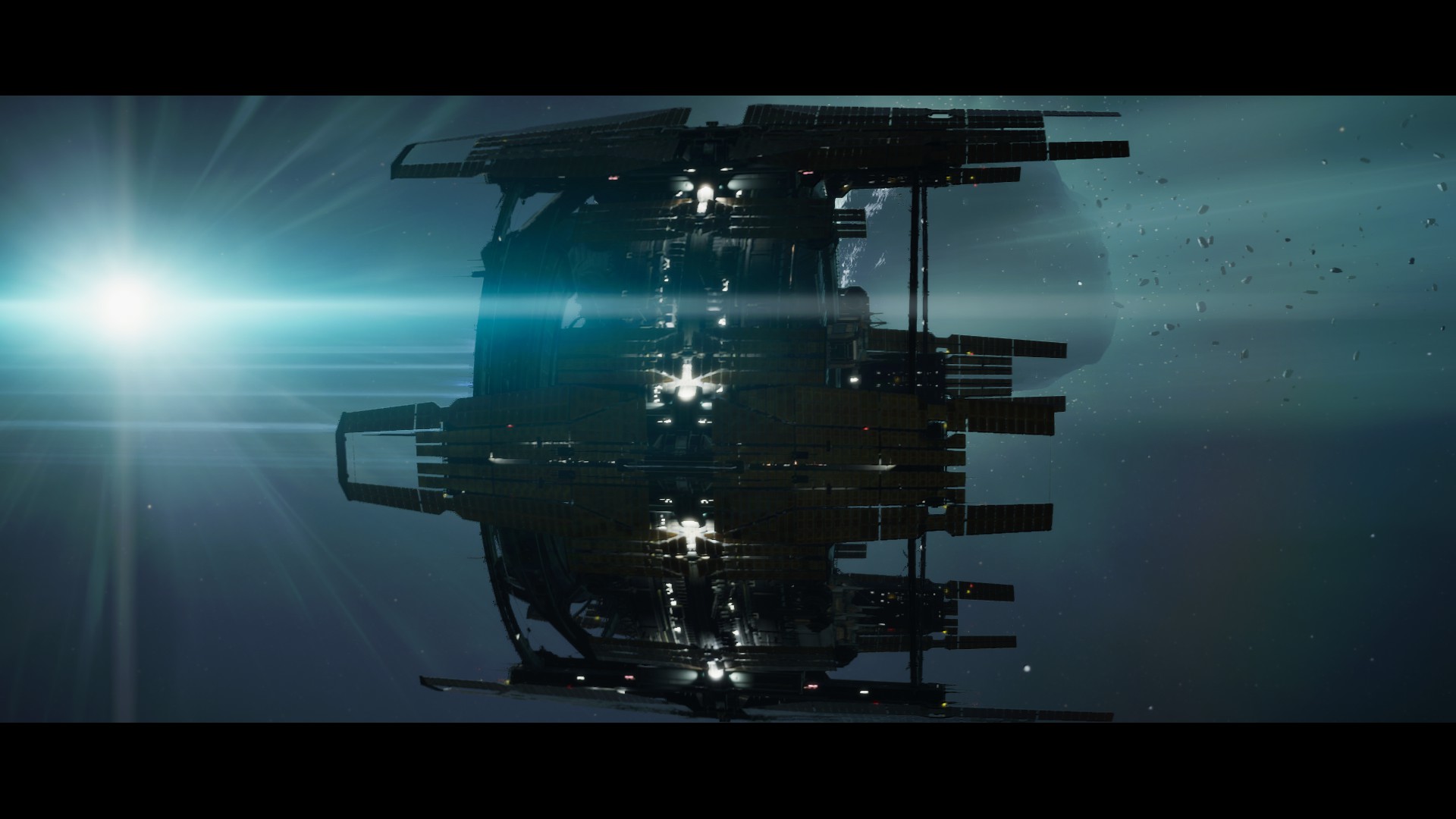
I’ve been really excited about IXION since I heard about it a few months back. A survival city builder where you build up a space station and jump from system to system collecting the resources you need to survive? Sign me up! Unfortunately, IXION feels like an Early Access release, and with the number of bugs and balance issues, the asking price is far too high. Recently, I was unable to load several recent saves; I had to go back a few hours to find a save that would load. That sort of lost progress is unacceptable in a full release.

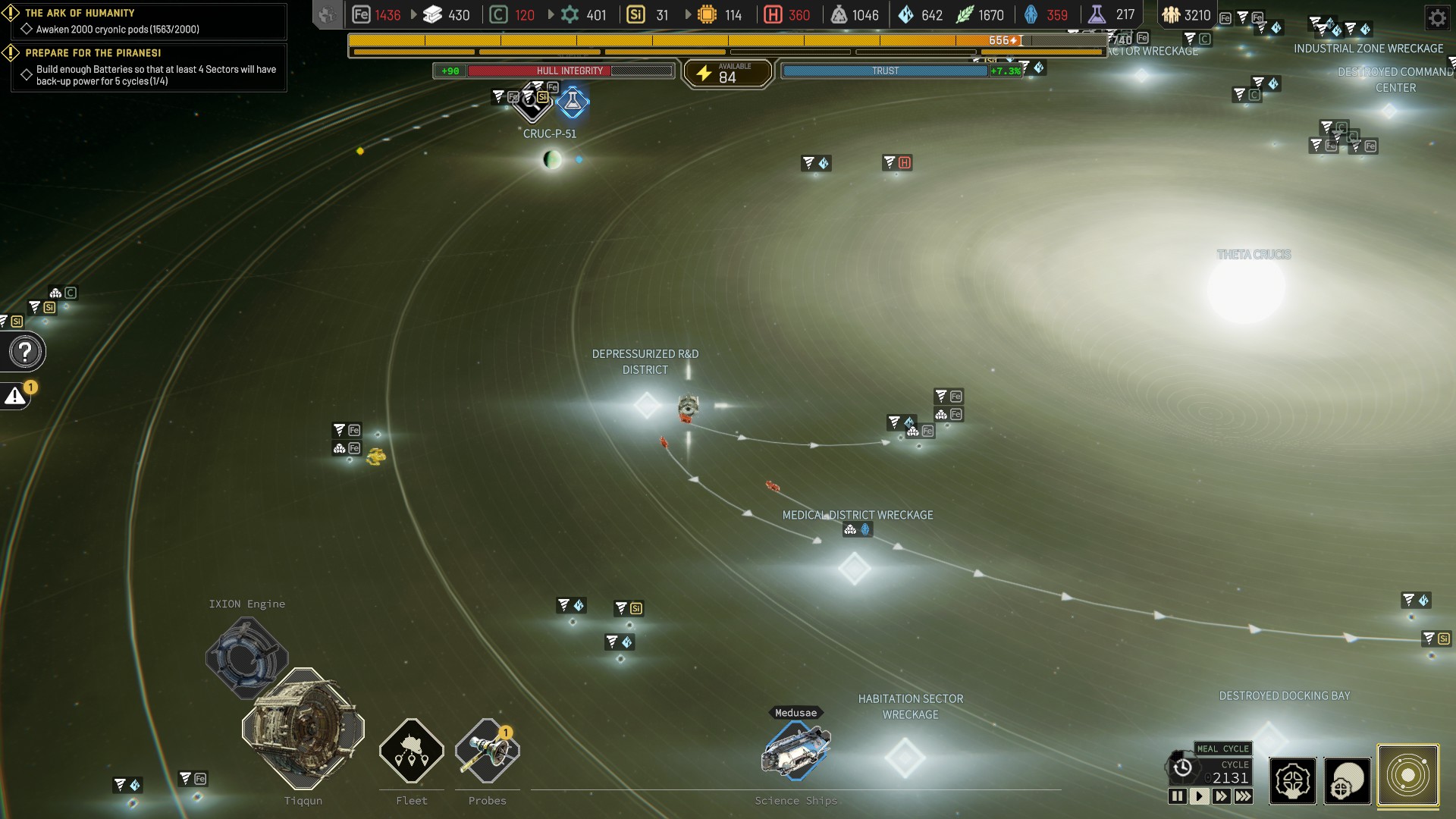
Travelling through subspace. Or hyperspace. Or whatever it’s called in IXION.

IXION is in the vein of Frostpunk, Surviving Mars, and other survival city builders and gets compared to those a lot. It’s extremely difficult early on and forces you to make some hard choices at times, but the difficulty feels artificially inflated by seemingly arbitrary penalties. The go-to example is in the first chapter of the game: you get a permanent -1 stability penalty due to story events, and if you linger in the starting system too long, you get another -1 stability penalty for remaining there. Once you leave, the penalty for staying is removed, but it’s replaced with a new permanent -1 stability for leaving that system behind. I understand that the penalty for lingering is to encourage the player to keep progressing instead of depleting a system and being over-prepared, but it seems arbitrary when you’re just guaranteed a different penalty for progressing. That said, starting in chapter 2 you’re able to counter the stability penalty with a number of stability-enhancing buildings, at which point you can linger as long as you like.

However, there are some penalties that just don’t make sense. There’s a -1 stability penalty for having a lot of colonists in cryo-pods, which encourages the player to simply leave people behind instead of rescuing them. In this case, the penalty is again to prevent the player from being over-prepared by having people available to replace any lost by random accidents, but just as before, seems backwards when applied to the game. (And an objective in the first system requires you to recover 500 pods.) Once you’ve unlocked waste recycling (which seems to come later in the tech tree than it should for an advanced mobile space station), there’s a penalty for storing waste rather than purging it into space. Here, the penalty seems to balance the power of recycling, since it essentially makes you self-sufficient.

Aside from the arbitrary penalties, this space station capable of travelling through space and time seems to be held together with duct tape and chewing gum. In Frostpunk, you have to keep a stockpile of coal to keep the generator burning. In IXION, your space station is constantly deteriorating and requires constant repair; and those repairs require the same resource used to build structures; sometimes you get to choose between housing your population or repairing the station. (Though if you have to make that choice, you’re already losing.) The speed of the deterioration increases as you progress (with each jump both lowering your maximum hull integrity and permanently increasing the deterioration rate), and each sector you open permanently increases the deterioration rate. I think a better (and more logical) choice would be to have jumps damage your hull (requiring repairs at the start of each system) without causing constant deterioration. Opening new sectors should have no effect on deterioration (I just don’t get that at all). Moving your station should and does deteriorate your hull, as positioning is a powerful mechanic and makes a good trade-off.

Making things worse is the number of non-workers you end up with. These are essentially worthless population. You can train them as colonists, but you don’t really need that many of them. As you thaw people, you’ll end up with more and more people that require housing and food but provide no benefit. I think the non-workers are meant to represent those that stay at home while others in the family work (like children), but there should be some way to train non-workers into workers. There’s an option later in the game so you only thaw workers, but it comes with a hefty -3 penalty. (With a special tech later to reduce it to -1.)

Certain actions like moving your station or activating the jump drive drain all power from your station, requiring it to run on batteries. To prevent batteries from draining quickly, you typically need to disable a bunch of buildings, which is annoying micromanagement – it’d be nice to simply have an option on each building to toggle whether it runs on battery power or not (with certain buildings like housing lacking that option). Alternatively, the station could just use the batteries themselves to power the jump – if you’re not generating enough power, you won’t be able to move or jump, or will have to wait a long time to charge the batteries.

On a positive note, I really enjoy the fleet management and sending ships around the system. Sending probes to discover new resources or points of interest is a resource sink but works really well; cargo and mining ships are automated and tend to do what I want; and sending science ships around to investigate anomalies is fun. Ships gain experience as they do their thing, making them more capable over time. I’ve read about bugs with the ships but I’ve been fortunate enough not to run into any. To balance this, however, there are space hazards that all your ships will happily fly straight through instead of navigating around. There should be some option to simply say “avoid hazards” with the penalty of having those ships take longer to make their trips.

Construction and building design is good, with lots of different shapes and sizes requiring some sector-planning Tetris to get everything to fit. Sectors are isolated and can specialize, which is nice, but the amount of space you have to sacrifice to things like stability-improving buildings (which are large) makes it difficult to truly specialize sectors. Workers can’t travel from one sector to another, so you can’t, say, have a food-and-housing sector and an industrial sector – the housing, food, and medical facilities have to be present in every sector. (Though food production can be located in a different sector and exported where needed.)

My favorite choice in the entire game.

The research you can do at planets along the way is also a lot of fun. You send a science ship out to a planet to investigate and respond to the events in a choose-your-own-adventure style branching dialog tree. Not every event has a positive outcome – sometimes it’s better to just leave things alone. However, it’s typically worthwhile to explore every planet, if just for the science income.

Later in the game, after you’ve unlocked enough technology, you’ll be swimming in resources and have a new problem: not enough storage space. It’s a weird predicament to be in, where you can’t even deconstruct a building because you have no place to put the resources. I don’t need to use my mining or cargo ships anymore (unless I want to), because I can use recycling to get any resource I need. I have an entire sector dedicated to housing most of my 4000-strong population (and all those non-workers), which generates enough waste to keep all my recyclers running non-stop. (Though I had to turn them off because I had too many resources.)

I’m far enough into the story now that I can say I actually like it. It’s not designed to be entirely clear – there’s a lot of mystery around what’s been going on in your absence. But each new system introduces a new obstacle to deal with: chapter 2 introduces space hazards, chapter 3 has a moving hazard, and chapter 4 introduces an enemy that pursues and attacks you.

All that said, the game is gorgeous. The space maps, the external station views, the interiors; everything looks great.

For a game I was extremely excited about, this has been pretty disappointing (being unable to load a save was particularly defeating). I’m sure all these problems will be fixed through patches, but skipping an Early Access release was a poor choice – I’d reserve my judgement if this was an early release. However, for a full release at this price, there are simply too many issues to recommend IXION at this point. I definitely enjoy the game, however, so maybe in a few months I can enthusiastically recommend the game.

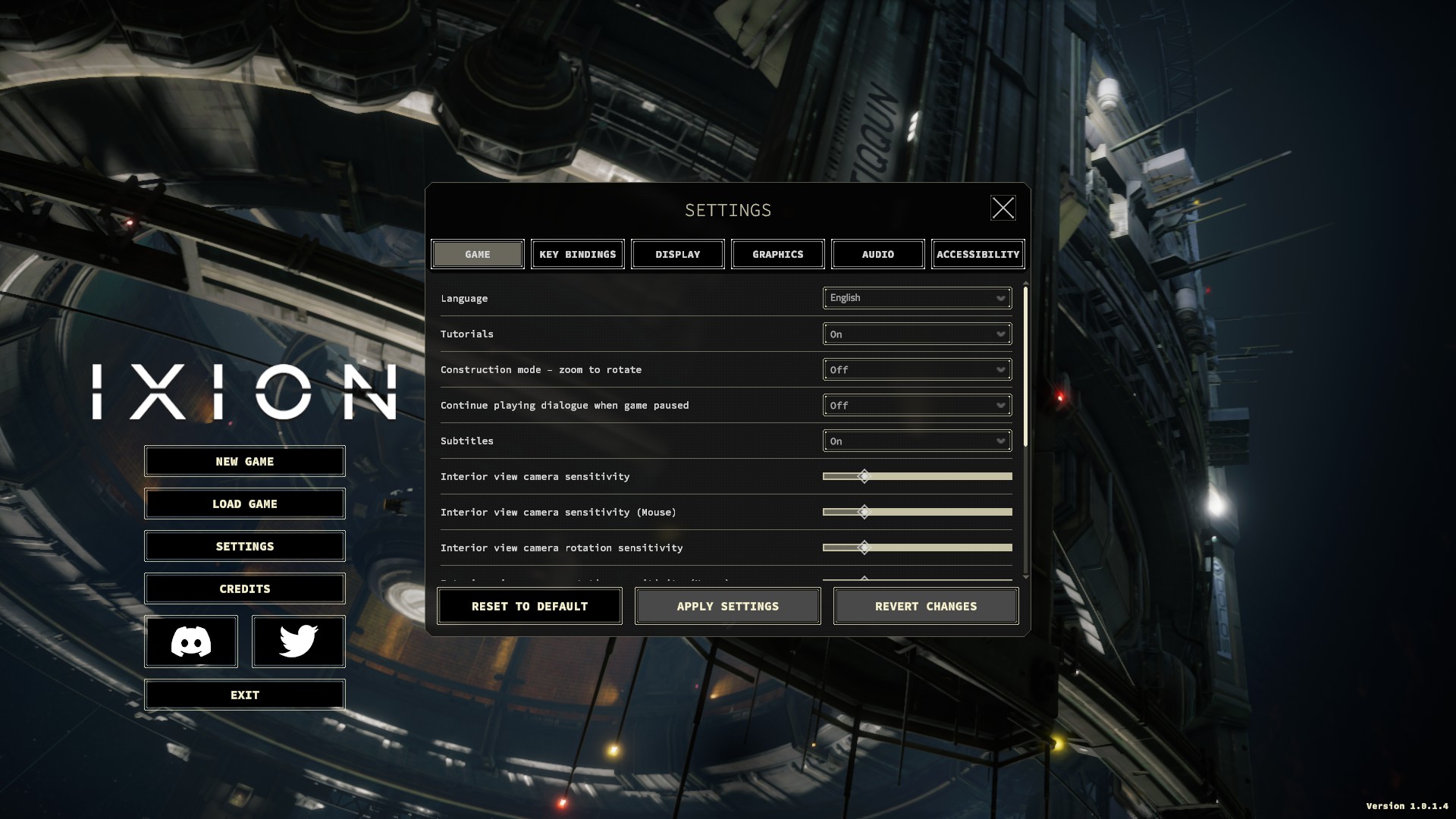
Also, random side note: the main menu gives me some extreme motion sickness. The background video is views of the station spinning through space, and when you pop up a static settings menu over that with a not-quite-opaque background, it’s vomit time.

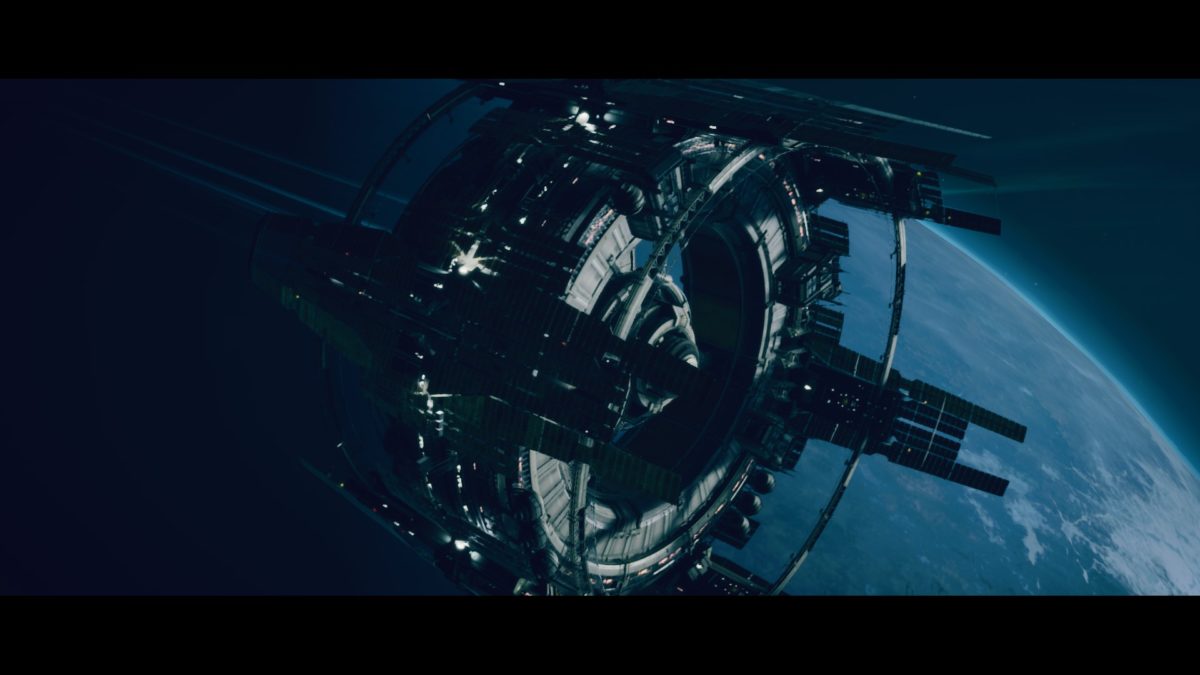
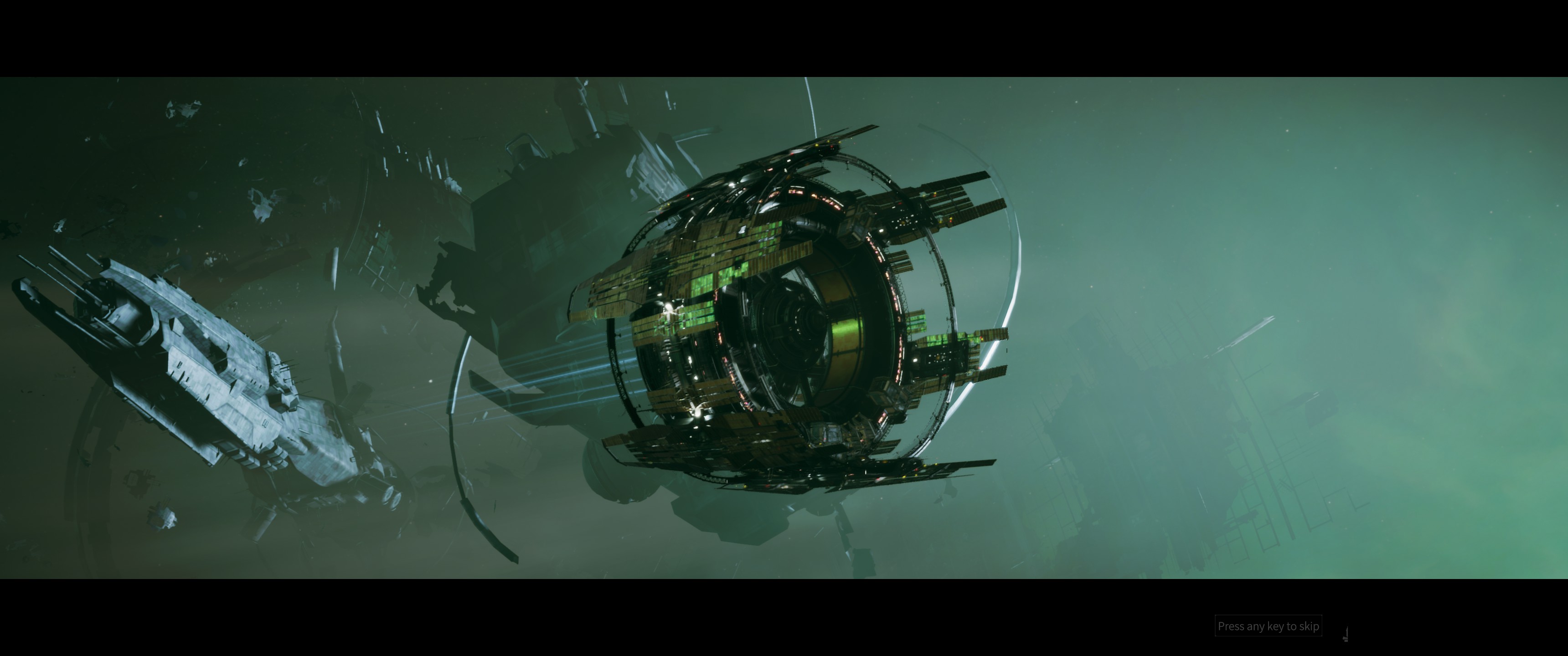
IXION main menu, with settings menu open; Tiqqun space station rotating in background.
Luckily the space station can’t rotate in a screenshot.
Categories
Games Reviews

Review: Against the Storm (Early Access)

I play a lot of survival city builders, but there’s always a certain point where you’ve solved all the puzzles, balanced your resources and population, and the “survival” part fades away as you just keep building.

Against the Storm solves that issue by making each city short-lived. You’re constantly starting from scratch and working to balance your population and resources, with the added difficulty of the forest getting angrier the longer you’re around. Each level also has a loose time limit represented by the “Queen’s Impatience”, and if you haven’t achieved your goals quickly enough, you lose. (Which really just means you don’t get as many resources for the meta-progression.)

The city building is kept fresh by randomization of the buildings you can choose from; you can’t follow the same pattern every time because you may not have the same buildings available. In addition, each city has random modifiers that provide bonuses and penalties, and often affect how you approach your expansion.

The meta-progression between cities adds new starting bonuses, new buildings and features, ways to mitigate the randomness (by providing re-rolls or expanding the number of choices you have), and other smaller bonuses (like slowing the queen’s impatience or increasing production speed). Like most roguelite systems, it simply makes the game a little easier the longer you play.

Aside from the gameplay itself, Against the Storm is extremely well-polished for an Early Access game – the visuals are great, everything feels “complete”, and I have yet to run into any bugs. The team updates the game every two weeks, and recent updates have added a lot of new content and adjusted several aspects of the game.

Against the Storm has quickly become one of my newest addictions, being pretty easy to play but also having a lot of depth and difficulty (if you want to push into higher difficulty levels). I’ll definitely be playing it for a long time to come.

Categories
Games Reviews

Fallout 76 in 2022

October 2022 marks Fallout’s 25th anniversary, and Game Pass gave me a free month of Fallout 1st, so I decided to reinstall the game and see how it’s progressed since I last played (nearly two years ago), especially with the new Pitt area to explore.

I think I like the game even less now than I did before, even with the various improvements that have been made. Even with a month of Fallout 1st membership, Fallout 76 couldn’t hold my attention for a week.

Quality of Life

There have been a few great quality of life improvements since I last played. Some of these have been around a while, but it’s been long enough since I played that this is my first time interacting with the new features.

There’s the punch card machine that lets you have multiple builds and easily switch between them. You can build one at your camp and there are several in the world (at the train stations and major hubs). I saved my stealthy rifleman build and added a power armor build. Unfortunately, that’s all you get for free; each additional slot (up to 13) costs 500 atom points – Fallout 76’s premium currency.

Legendary cores were added as a resource used to re-roll legendary weapons (or make non-legendary weapons legendary), which is a great way to work toward making your perfect gun. I don’t like that re-rolls change all legendary affixes on a weapon (instead of just targeting particular ones), but at least it’s something.

Storage was increased to 1200 back when I was still playing, but hasn’t increased since. The magic scrapbox is still a Fallout 1st exclusive.

The Pitt

The Pitt is a new instanced zone that you travel to for missions. It’s basically just a bigger, more quest-oriented Daily Ops map. Unlike Daily Ops, stealth builds are actually usable in The Pitt, which is nice. I’ve run it a few times, and it’s not bad, but the last part (with a heavy radstorm) is just annoying. The first time I played, I was unprepared and just kept dying over and over. I eventually gave up and just ran as far as I could before my next death.

There’s unfortunately not much more to say about it. It’s just a big quest map.

Unchanged

Most of the game seems like it’s basically the same, for better or worse.

Seasons are unchanged. Daily and Weekly objectives are still annoying chores, and leveling up on the scoreboard is still annoyingly slow. This hasn’t changed at all and it’s still terrible.

Gameplay still favors power armor in the late game, which is disappointing because there’s so much more you can do besides power armor. I guess it makes sense for a “live service” game, though, since you have to keep grinding for power cores to continue using your armor.

The seasonal world events are still around, and while they’re not bad, they’re just a chaotic horde mode (kill waves of enemies until you win). The alien invasion for the anniversary was fun.

The interface is still extremely clunky and difficult, thanks to having everything revolve around the Pip-Boy. I get that it’s a common Fallout thing, but this game is more complex, so it starts to get in the way. I guess it’s better for controller players than a virtual cursor, though.

And it’s still lacking that Fallout feel that made the older games so enjoyable.

Boring

Like I said above, Fallout 76 couldn’t even keep my attention for a week this time around. I was off playing other things I enjoy more. I used to enjoy the base building, but coming back to it, I found it very unintuitive and restrictive. I enjoy the weapon crafting, but I wasn’t really interested in pushing to re-roll “perfect” weapons with legendary cores. I had already finished most of the main storyline quests, so I was left with the boring repeatable “daily” quests.

Unless something big changes, I don’t think I’ll be coming back to Fallout 76. It’s a shame because they could do so much with it, but the foundation just isn’t there; they’d need to completely rethink the game to fix its numerous problems. And with so many better options available, it’s hard to recommend.

Categories
Games Reviews

Review: Sable

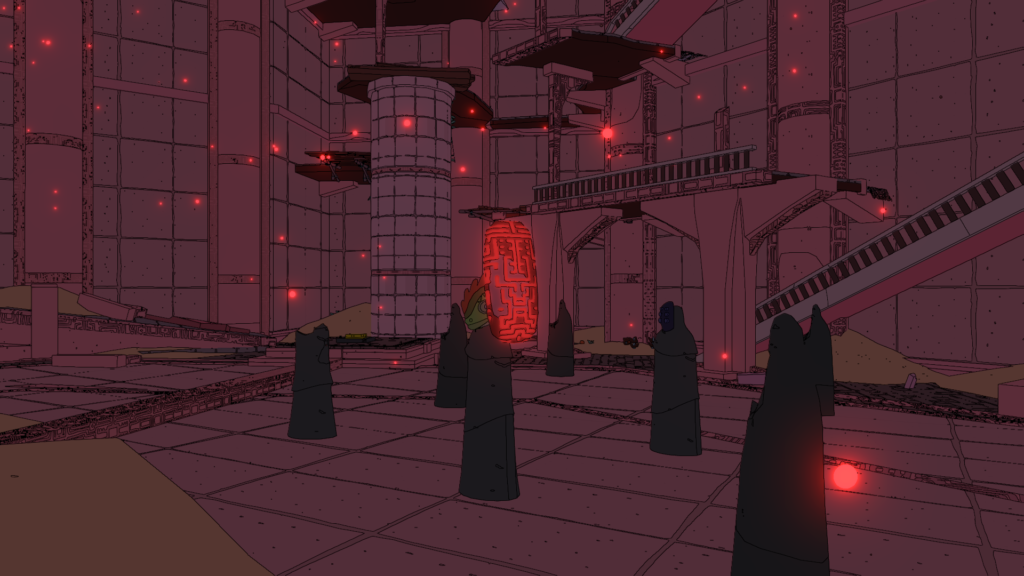
Sable was a day-one release on Xbox Game Pass back in September 2021, but I was late to the game and only started a few months ago. When I saw it’d be leaving on 10/16, I decided to get back into it and finish it up. Luckily, Sable isn’t a very long game, so I was able to complete it in a few days once I got back into it; and I’m very glad I did.

The Gliding

Sable is about a young girls’ “Gliding”, where she leaves her clan to explore the world and choose a mask. (It’s basically her rumspringa.) Your journey ends when you choose a mask, and most of the game is spent exploring the world and earning badges to claim each of the various masks. There’s no “right” choice in the end – you’re free to choose whatever you like and there’s no consequence for the choice.

Sable is a game that’s about the journey rather than the destination. You can trigger the ending pretty quickly (within a few hours), but even the message in the game that starts the final quest tells you there’s no rush. If you’re a completionist (like me), it’ll take a little longer – earning all the achievements took me around 11 hours (mostly because I only found out about fast traveling very late in the game). It’s relatively easy to earn all the achievements as well – they’re mostly focused around earning the different masks in the game and collecting a variety of clothes and bike parts. The only things I needed to “grind” for were finding enough of the chum eggs to finish the “Building a Queendom” quest for the chum queen. The achievements are really the only “push” toward completing everything.

The Masks

The mask crafter is a little creepy.

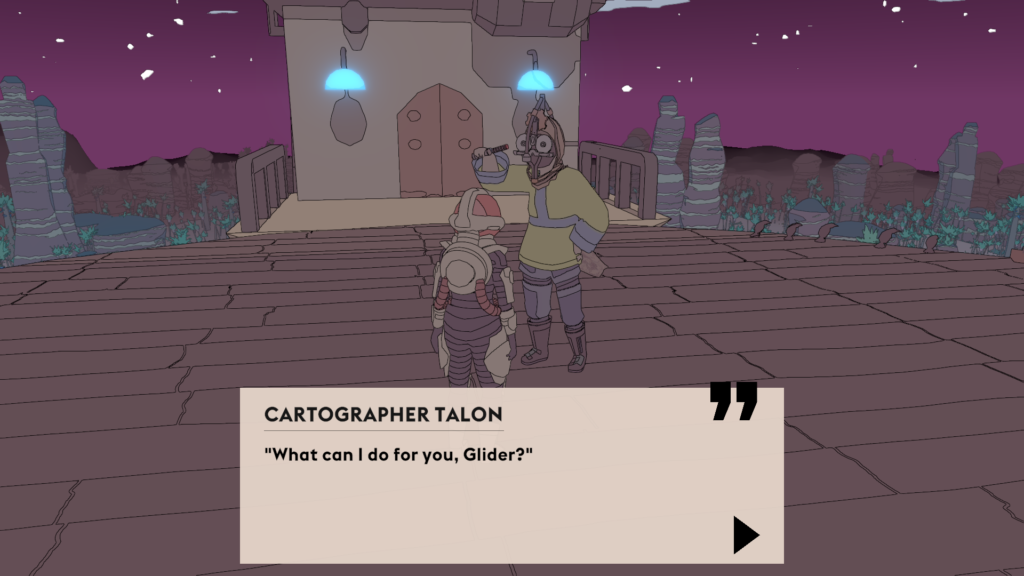
Masks in Sable indicate a person’s profession or focus. You start with the child mask and earn the Ibexii mask as you leave your clan. The other masks are all earned by completing quests or performing actions specific to the profession; each requires you to earn three badges. If you want the merchant mask, you can simply buy three badges from merchants and trade them in for the mask. You’ll have to perform favors for guards, mechanists, innkeepers, or entertainers to earn their badges. The climbing and cartographer masks both require some climbing. You earn scrapper badges by exploring wrecks and selling salvage. The remaining few masks are earned from special quests. Whenever you’ve earned a set of badges, you can visit a “Mask Crafter” to earn the specific mask.

Getting Around

Most of Sable’s exploration involves climbing, and the climbing mechanic is very similar to Shadow of the Colossus – your stamina depletes as you climb, and you drop if you run out. You can earn additional stamina through a special side quest which makes the climbing a lot easier. Generally, however, you don’t need the extra stamina to find everything you need.

You also have “The Perpetual” a magic stone that puts you in a bubble to slow your descent. You can cross large areas with it without losing too much altitude, and it also saves you if you fall from heights.

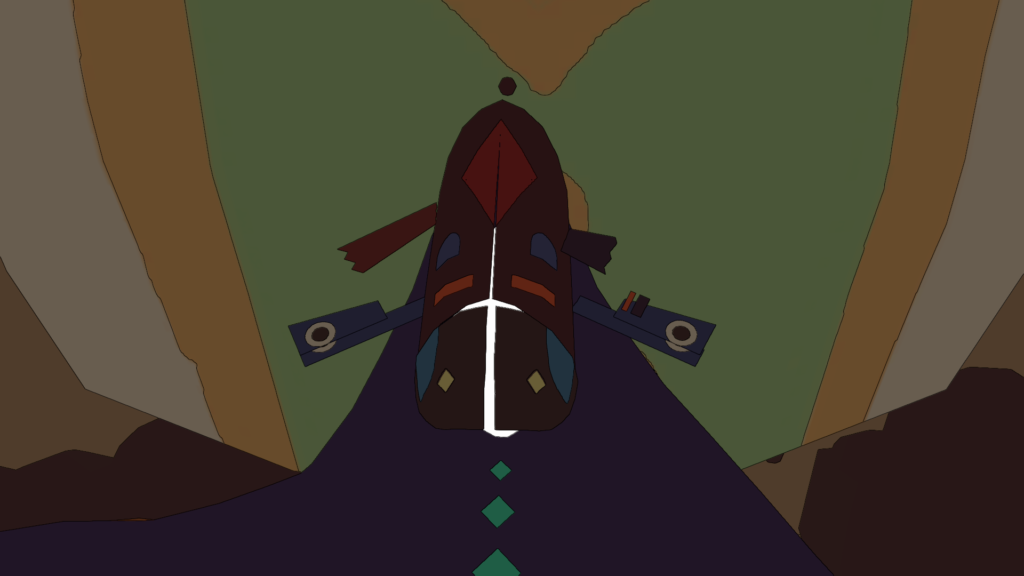
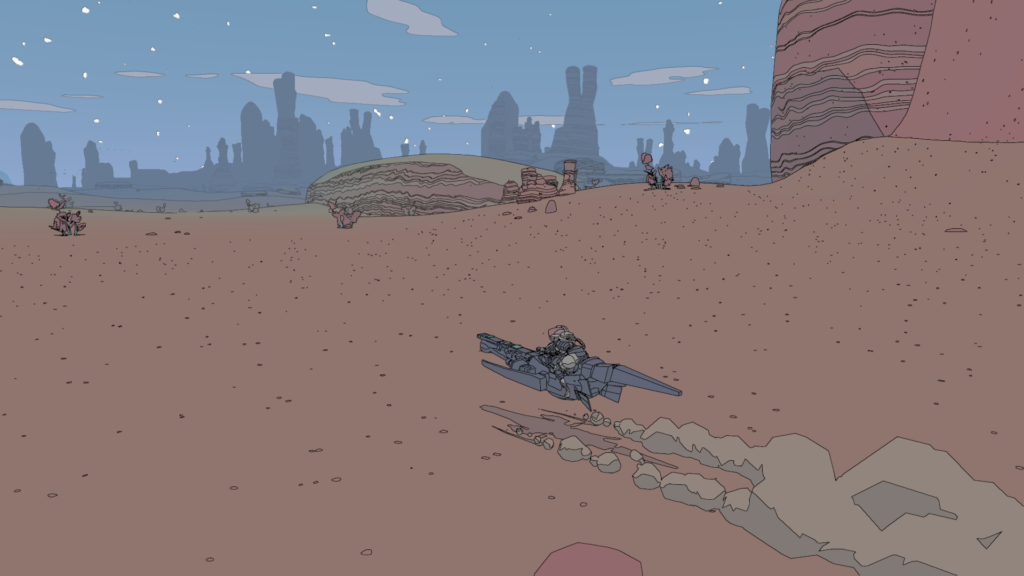
Before you leave your tribe, you spend some time collecting parts to build your hoverbike, which is the only companion you’ll have for most of the game. You can even call for it and it’ll find its way to you, like a faithful steed. As you play, you can unlock new parts for your bike to enhance its capabilities, along with new paints to change its look. Once I bought the speeder bike parts, I was cruising around the map with ease.

The hoverbike was also one of the buggiest parts of the game for me. It eventually stopped coming to me when I called, and when riding, it’d occasionally spaz out, flip, and start spinning on its nose. It was only a minor distraction, though; I loved my bike the whole game.

The background

Sable’s art style stands out, and I personally think it looks amazing. Each area in the game has a slightly different atmosphere and features to distinguish it from others. There are a few times when the art style hides some geometry that makes traversal a little more annoying (the vertebrae on the giant skeletons in a few areas will blend together and look like a flat surface), but in general the art style is really attractive.

Sable also has a great backstory that you learn by solving special puzzles in shipwrecks. It doesn’t have much bearing on the gameplay itself, but I’d love to see more games in the same world that Sable builds.

The End

Each player’s journey through Sable will be slightly different, and the choice each player makes in the end is personal, and I love that aspect of the game. It’s a great game to play when you just need some time to relax and explore, and I’m glad I took the time to see it through to the end.